
Yale University.
Calendar. Directories.

YIBS 1999-2000 Annual Report

IV.  YIBS RESEARCH CENTERS

D.  Center for Ecology and Systematics of Animals on the Verge of Extinction (ECOSAVE) 1999-2000 Annual Report

Center Director, Elisabeth Vrba

Faculty Members:
     Jacques Gauthier
     Jeffrey Powell
     Elisabeth Vrba

Senior Research Scientist:
     Adalgisa, Director
     ECOSAVE Conservation Genetics Laboratory

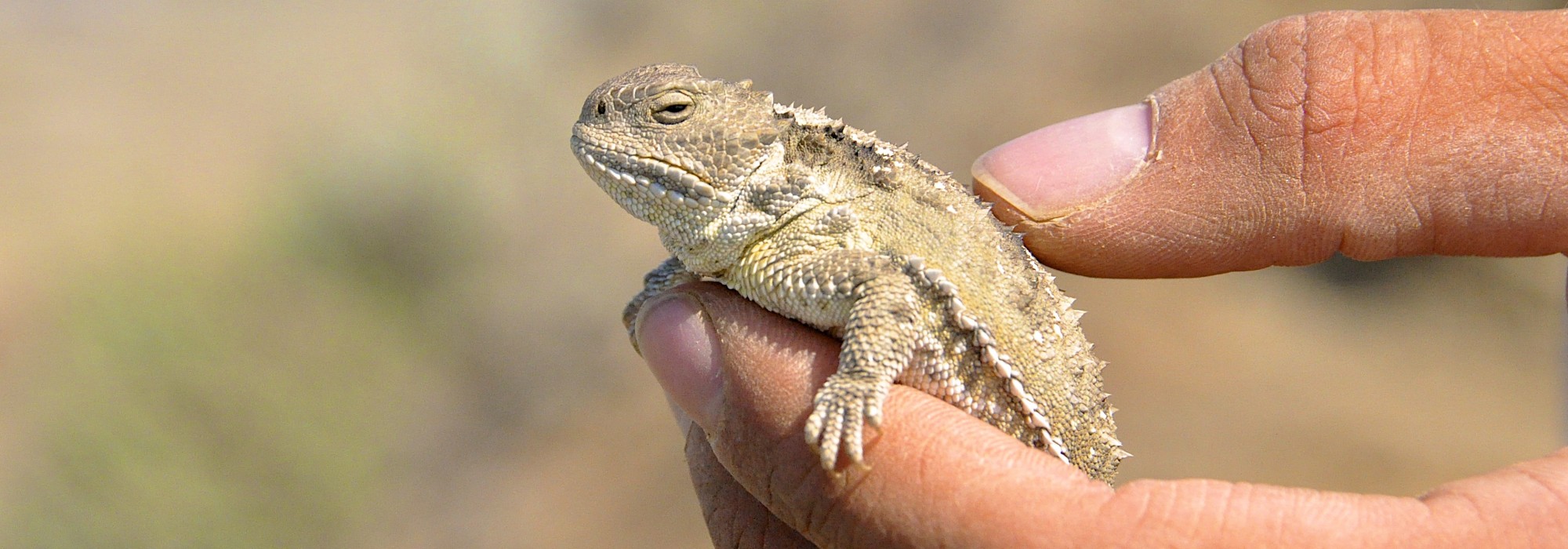
Major accomplishments in Jacques Gauthier's laboratory included reorganization of the Divisions of Vertebrate Zoology (VZ) and Vertebrate Paleontology (VP) in the Peabody Museum (PM) to better meet research and teaching needs of the Departments of Ecology and Evolutionary Biology (EEB), Geology and Geophysics (G&G), and Anthropology, as well as the Environmental Sciences Facility (ESF), Yale Institute for Biospherics (YIBS) and the School of Forestry and Environmental Studies (F&ES).  The greater part of the reorganization plan has been realized in the past year:  Mary Ann Turner has assumed the new Registrar position; Lyndon Murray, the new VP Collections Manager (CM), has arrived; and we are in the process of securing a new CM for "Dry" collections and a new Curatorial Assistant for VP.  Jacques's analyses of lizard embryology, phylogeny, ecology and paleontology continued, resulting in the addition of new specimens to the PM collections through fieldwork in the Mojave Desert.  Jacques also provided partial support for Skip Lazell and Greg Watkins-Colwell to collect amphibians and lizards from China, which specimens are now in the PM collections. 

Papers (appeared or in press) by Jacques Gauthier during 1999-2000:

Wagner, G.P. and J.A. Gauthier. 1999. 1,2,3 = 2,3,4: A solution to the problem of the homology of the digits in the avian hand.  Proceedings of the National Academy of Sciences 96:5111-5116.

Gauthier, J. and G. Wagner. 1999. 1-2-3 or 2-3-4 or both?: A solution to the problem of avian digit homology.  Abstract In:  American Society of Ichthyologists and Herpetologists (79th).  Pennsylvania State University, State College.

Nydam, R.L., J.A. Gauthier, and J.J. Chiment, 2000.  The mammal-like teeth of the late Cretaceous lizard Peneteius aquilonius Estes 1969 (Squamata, Teiidae).  Journal of Vertebrate Paleontology 20(3):628-631.

Laurin, M. and J.A. Gauthier, 2000.  In Maddison, D. and Maddison, W. (eds), The Tree of Life, entries on : Amniota; Amniote phylogeny; Autapomorphies of amniote clades; Diapsida; Diapsid phylogeny; Autapomorphies of diapsid clades. 

Jeff Powell's group continued to focus their major conservation efforts on giant Galapagos tortoises.  Two important events occurred this past year.  They published their first paper on these tortoises and it garnered considerable attention, including the public press (New York Times, British Broadcasting Corporation, among others).  Second, this past summer the team made a successful collecting trip, partly funded by YIBS in the form of ECOSAVE funds, to sample the two remaining subspecies not previously sampled.  They returned with about 200 blood samples, and now have about 2,400 blood samples, which are being analyzed, in the laboratory.

Papers (appeared or in press) by Jeff Powell during 1999-2000:

Caccone, A., G. Amato, O. C. Gratry, J. Behler, J.R. Powell.  1999. A molecular phylogeny of four endangered Madagascar tortoises based on mtDNA sequences.  Molecular Phylogenetics and Evolution,12: 1-9.

Caccone A, J.P. Gibbs, V. Ketmaier, El. Suatoni, J. R. Powell. 1999. Origin and evolutionary relationships of giant Gálapagos tortoises. Proceedings National Academy of Sciences (PNAS) USA, 96: 13223-13228.

Powell, J. R., A. Caccone, V. Petrarca, A. della Torre, and M. Coluzzi.  1999. Population structure, speciation, and introgression in the Anopheles gambiae complex. Parassitologia 41:101-113.

Gentile G., M. Slotman, V. Ketmaier, J.R. Powell, and A. Caccone. 2000. Attempts to molecularly distinguish cryptic taxa in Anopheles gambiae s.s. Insect Molecular Biology (in press).


In Elisabeth Vrba's ECOSAVE program, a paper on the causes of macroevolution in African Neogene biota and hominids was completed and published by the end of 1999 (Vrba, 1999).  Continuing collaboration with other members of the Middle Awash Research Program on new fossil finds from Late Neogene Ethiopian fossil strata resulted in publication de Heinzelin et al. (1999) in Science on the environment and behavior of the new hominid species Australopithecus garhi.  The year 1999-2000 marked the final preparation and publication of the volume "Antelopes, Deer, and Relatives: Fossil Record, Behavioral Ecology, Systematics and Conservation" (eds Vrba, E.S. and Schaller, G.B.) with chapters from 22 international contributors, sponsored by YIBS and the Wildlife Conservation Society, New York.  New systematic analyses of living and extinct antelopes (Bovidae) culminated in the first cladistic analysis of bovids that combines behavior and ecology with soft and hard anatomy (Vrba and Schaller, 2000.)  A preliminary report on a comprehensive new analysis of the all-African fossil record of larger mammals over the past 22 million years was completed and used to test hypotheses of macroevolution (Vrba in press, in Cenozoic Geology of Southern Africa).  A new statistical method was developed for calculation of the expected frequencies of first and last appearances of species in the fossil record under the null hypothesis of underlying constant probabilities of origination and extinction.  This method takes into account the observed changes in fossil preservation over time and geography, and adjusts expected turnover frequencies accordingly.  It allows statistical testing, by use of the hypergeometric distribution, of observed frequencies of first and last appearances of species in the fossil record against the frequencies expected under the null hypothesis.  The results, which point out intervals of significantly high speciation, migration, and/or extinction, are then compared with independent evidence of climatic change.  A detailed analysis by these methods of the African mammal record is in progress. 

Papers (appeared or in press) by Elisabeth Vrba during 1999-2000:

de Heinzelin, J., Clark, J.D., White, T., Hart, W., Renne, P., WoldeGabriel, G., Beyene, Y. and Vrba, E.S. 1999. Environment and behavior of 2.5-million-year-old Bouri hominids. Science 284 : 625-629.

Vrba, E.S. 1999. Habitat theory in relation to the evolution in African Neogene biota and hominids. In T.G. Bromage and F. Schrenk (eds.), African Biogeography, Climate Change, and Early Hominid Evolution, pp. 19-34. Part of New Series on Human Evolution (Series Eds Wood, B. and Ciochon, R.). Oxford University Press, Oxford, United Kingdom.

Vrba, E.S. and Schaller, G.B. (eds.) 2000.  Antelopes, Deer, and Relatives: Fossil Record, Behavioral Ecology, Systematics, and Conservation. Yale University Press, New Haven, Connecticut.

Vrba, E.S. and Schaller, G.B. 2000. Introduction. In Vrba, E.S. and Schaller, G.B. (eds.) Antelopes, Deer, and Relatives : Fossil Record, Behavioral Ecology, Systematics, and Conservation. Yale University Press, New Haven, Connecticut.

Vrba, E.S. and Schaller, G.B. 2000. Phylogeny of Bovidae (Mammalia) based on behavior, glands and skull morphology. In Vrba, E.S. and Schaller, G.B. (eds.) Antelopes, Deer, and Relatives : Fossil Record, Behavioral Ecology, Systematics, and Conservation. Yale University Press, New Haven, Connecticut.

Vrba, E.S. In press. Major features of Neogene Mammalian Evolution in Africa. In T.C. Partridge and R. Maud (eds.), Cenozoic Geology of Southern Africa. Oxford University Press, Oxford, United Kingdom.

Vrba, E.S., In press. Comments on Stephen Jay Gould. Natural History.

Vrba, E.S. In press. Expatiation. In Pagel, M. Encyclopedia of Evolution. Oxford University Press, Oxford, United Kingdom.

[back]

The ECOSAVE Conservation Genetics Laboratory Annual Report 1999-2000 

Laboratory Director, Adalgisa Caccone

FORMAL COURSES:

Spring

Molecular Approaches to Systematics, Conservation Genetics, and Behavioral
Ecology (EEB 375b/535b and F&ES 578)
This course had twelve students enrolled for credit and five graduate students and post docs auditing it.  People who attended were from the Department of Ecology and Evolutionary Biology, the Department of Molecular, Cellular, and Developmental Biology, Anthropology, the Department of Geology and Geophysics, the School of Forestry and Environmental Studies, and the Department of Epidemiology and Public Health.

Fall

Laboratory in Molecular Systematics (EEB315La, cross-listed in F&ES)
Last year this course had an enrollment of eight students. This year the enrollment is ten students (the maximum number accepted).  Students are both undergraduates and graduate students from the School of Forestry and Environmental Studies.

Conservation biology (EEB115)
This is the first year for this course, which is team-taught by Jeff Powell, Oswald Schmitz, and Gisella Caccone.  The course has an attendance of approximately 100 students.

Laboratory Training

During the past year, Dr. Caccone has been supervising the research of five graduate students (four from the Department of Ecology and Evolutionary Biology and two from the School of Forestry and Environmental Studies, and six undergraduate students who are Organismal Biology majors.  Several other graduate students have utilized the equipment and computer facilities of the ECOSAVE Conservation Genetics Laboratory (approximately five to six graduate and undergraduates).

Publicizing YIBS and the ECOSAVE Conservation Genetics Laboratory outside of Yale

Invited talks:

Symposium on Endangered Species" sponsored by the America Type Culture Association (Orlando 19 April, 1999)

Symposium on "Museum, Universities, and Biodiversity in the 21st Century" (San Francisco 7-10 May 1999)

Symposium on "Evolutionary Significance of Colonization" (European

Evolutionary Society meeting, Barcelona 23-28 August 1999).

In the first two Symposia, Gisella Caccone talked about the ECOSAVE Conservation Genetics Laboratory as part of the efforts by YIBS and Yale to address the need for formal training in the emerging field of conservation genetics and the study and preservation of biodiversity. 

Organizing a Symposium on "Molecular Approaches to Conservation ": Together with George Amato Wildlife Conservation Society (WCS), Gisella Caccone organized a symposium within the meeting of the Society for Molecular Biology and Evolution, Yale University, New Haven, CT June 17-20, 2000.  Invited speakers included: Oliver Ryder, Zoological Society of San Diego; Robert Fleischer, Smithsonian institution; Rob De Salle, American Museum of Natural History.  The scope of the Symposium was to discuss the role of genetics in conservation biology among a group of molecular evolutionists to look in depth at the issue of what molecules can and cannot do in conservation biology.  Usually these topics are debated in conservation biology meetings, where expertise in genetics is limited.

Ongoing Research Projects:

Molecular Biogeography Of Cave Life: A Study Using MtDNA From Bathysciine Beetl>
This study focuses on phylogenetic relationships in two distinct species assemblages of cave-dwelling beetles with similar disjunct distributions in the Pyrenees and Sardinia.  One assemblage contains six species in the genera Ovobathysciola (four species) and Patriziella (two species) on Sardinia and one species of Anillochlamys in the Pyrenees.  Species within the two Sardinian genera co-occur in the same karst area.  Although, they are believed to be each other’s closest relative, they have very different body types (globular body with short appendages in Ovobathysciola; elongated body with long appendages in Patriziella), which are believed to reflect different degrees of adaptation to cave life.  The other assemblage of Bathysciine beetles includes three species in the genus Speonomus in the Pyrenees and one on Sardinia.  All the species are rare and many are endangered.  One issue of particular interest was whether Ovobathysciola and Patriziella are reciprocally monophyletic, or whether each of the Patriziella species evolved independently from the co-occurring Ovobathysciola species, as the similar morphology of the Patriziella species might be due to convergence rather than common descent.  Based on DNA sequences of the COI region of the mtDNA, neither scenario was supported.  Rather the two Patriziella species are sister taxa embedded within the Ovobathysciola radiation.  In addition, the well-dated geological history of this region allowed us to calibrate absolute rates of COI evolution, the first such estimates for any insect.  Finally this study suggests that the evolutionary acquisition of typical cave adaptations (e.g., elongated body and appendages) may occur at about the same rate as loss of traits (e.g., eyes and pigmentation) associated with cave life.

Conservation Genetics of Galapagos tortoises
In collaboration with Jeffrey Powell (EEB) we are carrying out an extensive survey of the genetic divergence within and between the eleven extant sub species of the Galápagos giant tortoises, Geochelone nigra.  These tortoises are the largest living tortoises and one of the two remaining species of giant tortoises in the world.  Within the archipelago, only eleven of the subspecies survive to the present. Most of the subspecies are endangered. The decline of the populations is primarily due to human impact.  Buccaneers and whalers began in the 17th century to remove tortoises from the islands and use them as a source of fresh meat.  Introduced animals such as feral goats, pigs, dogs, rats and continued poaching represent more threats to the surviving populations.  Although these tortoises have become a symbol of the conservation efforts to preserve the unique fauna of the Galápagos Islands, little is known about the levels of genetic divergence between the different subspecies.

Previous work on several mtDNA genes has produced the first DNA based phylogeny of the group and shown the presence of fixed nucleotide differences between most of the 11 surviving subspecies. This year we concentrated on:

  • analyzing patterns and levels of genetic divergence on fast evolving nuclear DNA regions

  • using the fixed DNA differences found in the mtDNA to assign individuals of unknown origin to a particular island and sub-species.  The information gathered from this study is helping in the management of breeding programs of both wild and captive individuals.

  • Conservation genetics of the Aldabra Giant Tortoises

With funds generated from a gift from Coleman Burke to YIBS, we have recently begun a genetic study of the Aldabra and Seychelles tortoises (Geochelone gigantea), a group of highly endangered giant tortoises.  We want to produce relevant data that will aid in understanding the phylogeny and taxonomy of the group, and to help in designing in situ conservation programs for this group. Gisella Caccone is collaborating with Justin Gerlach from Cambridge, England, who will provide blood from wild caught animals from all the extant newly described species, and with several Zoos in the USA to obtain blood samples from the Aldabra and Seychelles tortoises in captivity.  To date we have blood from thirty animals and we were successful in amplifying and sequencing one mitochondrial gene (cytochrome b).  Future work will concentrate on assaying for genetic variation other DNA regions, producing a phylogeny for the group, and finding DNA markers that will help in the management of breeding programs for this species.

Attempts to Molecularly Distinguish Cryptic Taxa in the Anopheles gambiae s.s. mosquitoes
The Anopheles gambiae complex contains the most important vectors of malaria in sub-Saharan Africa, and hence the world.  Despite decades of research on this complex, it continues to reveal novel complexity.   Until about 1960, it was considered a single species; between 1965 and about 1985, it was considered six species.  In the last 15 years, the systematic status of the complex has again been thrown into turmoil, especially centered on the most important taxon, An. gambiae s.s.   It is now clear from analyses of frequencies of chromosomal inversions, that this "species" is subdivided into distinct genetic units, i.e., An. gambiae s.s. is not a single panmictic unit.  This has great practical significance: it impacts such important processes such as the spread of insecticide resistance genes as well as impact the outcome of any attempts to genetically manipulate populations.  In addition, these chromosomally defined "forms" are ecologically distinct which determines their spatial and temporal distributions, e.g., the Mopti form can breed in the dry season, thus allowing transmission of malaria year round. To date these forms have largely been defined by inversions in the right arm of the second chromosome.  Considerable effort has been expended in searching for DNA-based markers that would both confirm the reality of the forms as genetically distinct, as well as provide a diagnostic procedure to identify the forms in both sexes at all developmental stages, a great benefit to field research.  Such attempts have been only partially successful.  We have been applying a relatively new approach, which combines advantages of previous approaches without the drawbacks; it is called AFLP (Anonymous Fragment Length Polymorphism).  Moreover, we have modified it to further increase its usefulness as a diagnostic tool in epidemiology.  This technique allows a rapid screen to detect DNA differences between large numbers of mosquitoes simultaneously; many sequences are simultaneously compared.

Phylogenetic relationships of the relict snakes in North America
Theodora Pinou, a lecturer in the EEB, is collaborating with Jeff Powell on a project attempting to resolve one of the last remaining questions regarding the origin and relationships of Nearctic snakes.  This will be accomplished by reconstructing the phylogeny of eight enigmatic species of North American snakes called Relicts, whose affinities to one another, and to other snakes are poorly understood.  The two hypotheses that will be tested are that all eight of the North American Relict snakes form a monophyletic group, and that these North American Relicts are most closely related to a South American clade of xenodontine snakes.  The project entails:

I.      To isolate DNA from several individuals of each Relict species;

II.      To sequence mitochondrial and nuclear gene regions for each Relict species;

III.      To combine these 12s and 16s mitochondrial sequences into an existing database of aligned snake sequences;

IV.      To employ methods of phylogenetic reconstruction of the mitochondrial and nuclear gene regions.

The results of this work provide several valuable contributions to the field of Systematic Zoology.  First, this study will provide an evolutionary framework for studying the biodiversity and biogeography of the Nearctic fauna.  Second, this study will provide a comprehensive phylogenetic framework from which to examine the evolution of morphological characters in snakes.  Third, this study will contribute to our understanding of the differences in the pattern and rate of molecular evolution between nuclear and mitochondrial genes in another vertebrate group (i.e., snakes).  Fourth, this work offers the opportunity to train two undergraduate students in the fields of molecular systematics and taxonomy, and to expose them to scientific meetings, good habits in museum science, and manuscript preparation.

Determining phylogenetic relationships between extant prairie chicken populations and the extinct heath hen based on mitochondrial DNA sequences
Eric Palkovacs, a master student from the School of Forestry and Environmental Studies, is engaged in a study of the genetic differentiation of extant and extinct prairie chickens. The Eastern prairie chicken subspecies, the heath hen (Tympanuchus cupido), once roamed the fields and scrub oak lands of New England.  The heath hen clung precariously to existence for sixty years as a small population limited to the island of Martha's Vineyard until it was driven to extinction in 1932.  Greater prairie chicken populations are declining across most of their range, and the Attwater's prairie chicken (Tympanuchus cupido attwateri), which is limited to a small population on the Gulf Coast of Texas, is critically endangered and may soon join the heath hen if current population trends do not change. We are using mitochondrial DNA sequence analysis to assess levels and patterns of genetic variation within and between populations and subspecies of North American prairie chickens (Tympanuchus cupido), including the extinct heath hen.  We are analyzing field-collected blood and feather samples from range-wide greater prairie chicken populations and from the single Attwater's prairie chicken population.  We are also examining genetic material from museum skin heath hen specimens from Yale University's Peabody Museum, the American Museum of Natural History in New York, and private collections on Martha's Vineyard.  The resulting molecular phylogeny will have important conservation implications.  First, The Nature Conservancy has shown considerable interest regarding the re-establishment of a population of prairie chickens on Martha's Vineyard to replace the heath hen, and one role of this project is to identify the closest extant relative of the extinct heath hen for this potential introduction.  Second, this project will elucidate the genetic distinctiveness of the Attwater's prairie chicken population and other greater prairie chicken populations, thereby providing valuable information for determining whether supplementing declining populations is a desirable conservation strategy.

Mate recognition Systems in Rotifers
Lisa Suatoni, an EEB graduate students, is studying the role of mate recognition divergence in speciation in the marine rotifer Brachionus plicatilis.  This entails looking for large-scale and small-scale patterns of divergence in the mate recognition system within this species complex.  She is quantifying and mapping degrees of mate recognition onto a phylogeny of populations from around the world.  Imbedded in a branch of this phylogeny will be a smaller scale phylogeny of populations in a local and regional area. This will help to ascertain what evolutionary forces (drift, selection) are playing the largest role in the divergence of this mate recognition system.

Genetic differentiation of European populations of roe deer
Saverio Vicario, a graduate student from EEB is collaborating with Gisella Caccone and Frederika Kaestle from Anthropology, to analyze levels of genetic variation in extant and extinct populations of Italian populations of roe deer.  Roe deer are distributed in the Palaearctic and in continental Asia.  The European roe deer (Capreolus capreolus) show wide morphological, ethological, and ecological variability.  Roe deer populations in southwest Europe have been relatively disturbed as a consequence of habitat fragmentation and restocking for hunting purposes.  Roe deer populations of the western Italian Alps have been extirpated by over-hunting during the last 30 years, and then restored using stocks from the eastern Alps, central Europe and the Balkans.  In contrast, roe deer of the eastern Italian Alps have been preserved and still represent the autochthonous Alpine populations.  Isolated roe-deer populations in central-southern Italy have been recognized as an endemic subspecies, named C.c. italicus.  The levels of genetic diversity and the phyleogeographic relationships among roe deer populations are poorly known.  Therefore, the eventual genetic consequences of human disturbances are still unknown.  For these reasons, roe deer provide a case study to evaluate the genetic effects of fragmentation and human disturbances on managed populations.  We are analyzing historical  (pre-dating the restocking of the natural populations) and fossil samples (from the Pleistocene) to study the genetic structure in undisturbed vs., disturbed roe deer populations.  The comparison of historical and fossil samples from southern Italy with modern samples will be important in assessing if the southern Italian subspecies (now reduced to few animals in a protected area) is genetically distinct from the other Italian populations.  This will also provide valuable information for determining whether supplementing the declining population is a desirable conservation strategy and eventually suggesting from which populations the restocking should occur.

Use of molecular techniques to study levels of fungal diversity on root tips
Michael Booth, a Ph.D. student in the School of Forestry and Environmental Studies, is working on using molecular techniques to study levels of fungal diversity on root tips.  Many recent papers have documented the potential for many species of ectomycorrhizal fungi to form extensive belowground networks that connect the roots of co-occurring trees, often including a diversity of tree species.  To gain an initial estimate of fungal "host-generality" (or "host-inspecificity") Michael is collecting several seedlings each of the five or six dominant forest species where they co-occur and are growing underneath a similarly diverse forest overstory.  He samples root tips from each seedling and will sort them initially by morphotype.  Then he will extract DNA from them, and Gisella Caccone will amplify the ITS region of the fungal DNA and study the pattern of genetic variation at that locus.

Individuality and Multilevel selection in the Colonial Rotifer Sinantherina socialis
Melissa Garcia, an EEB graduate student, is using the colonial rotifer, Sinantheria socialis to study multilevel selection and individuality.   S. socialis colonies are suitable for this study because they have characteristics which are more typical of individuals rather than of colonies.  For example, a juvenile colony is produced as a unit, it matures as a unit, it reproduces fully formed juvenile colonies as a unit, and it senesces as a unit.  An additional trait of S.socialis colonies, which is important to this study, is that, under some circumstances juvenile colonies fuse.  Colonies consist of zooids (colony members).  For a given heritable colony trait, that trait's evolution can be influenced by the effects of colony level selection and zooid level selection.  When there is only colony level selection with no zooid level selection, then the colony itself begins to take on characteristics of an individual.  In order to study the degree of individuality in S.socialis colonies, various laboratory lines of S. socialis colonies are used to analyze the levels of selection for given traits, the heritability of these traits, the mechanism of colony reproduction, and the effects of colony fusions on individuality.  An important part of this project is verifying that the different laboratory lines of S.socialis are genetically distinct and that the results gathered are not particular to a single clone.  This is especially important for the colony fusion studies.  Preliminary evidence, such as the fact that the different lines have different pH tolerances, suggests that the laboratory lines are genetically distinct.  This will be verified using molecular methods; DNA will be isolated and PCR will be used to amplify highly variable regions to look for differences between lines.  This method has been used with success on other rotifer species.

PUBLICATIONS 1999-2000

Caccone, A., G. Amato, O. C. Gratry, J. Behler, J.R. Powell.  1999. A molecular phylogeny of four endangered Madagascar tortoises based on mtDNA sequences.  Molecular Phylogenetics and Evolution,12: 1-9.

Allegrucci G., A. CACCONE, V. Sbordoni. 1999. Cytochrome b sequence divergence in the European Sea Bass (Dicentrarchus labrax) and phylogenetic relationships among some Perciformes species. J. of Zool. Syst. and Evol. Res. , 37:149-156.

Caccone A, J.P. Gibbs, V. Ketmaier, El. Suatoni, J. R. Powell. 1999. Origin and evolutionary relationships of giant Gálapagos tortoises. Proceedings National Academy of Sciences (PNAS) USA, 96: 13223-13228.

Powell, J. R., A. Caccone, V. Petrarca, A. della Torre, and M. Coluzzi. 1999. Population structure, speciation, and introgression in the Anopheles gambiae complex. Parassitologia 41:101-113.

Caccone A  and V. Sbordoni.  2000. Molecular Biogeography Of Cave Life: A Study Using MtDNA From Bathysciine Beetles. Evolution (in press).

Gentile G., M. Slotman, V. Ketmaier, J.R. Powell, and A. Caccone. 2000. Attempts to molecularly distinguish cryptic taxa in Anopheles gambiae s.s. Insect Molecular Biology (in press).

Pinou T. and A. Caccone. A method of obtaining mitochondrial DNA from snake bone. Herpetological Review (submitted).

[back]

E.  The Center for the Study of Global Change 1999-2000 Annual Report

The Center for the Study of Global Change, under the directorship of Karl K. Turekian, offers a fall and spring seminar series of “Topics in Global Change.”

TOPICS IN GLOBAL CHANGE, Fall, 1999

Monday, 2:00 - 3:30 PM,  Room 102 Kline Geology Laboratory

September 13 Karl K. Turekian, Department of Geology & Geophysics, Yale University: “Geochemistry and global change”
September 20 John Mak, SUNY, Stony Brook: “Assessment of tropospheric OH levels using 14CO”
September 27 Roger Summons, Australian Geological Survey: “Molecular evidence bearing on the presence of molecular oxygen in the Precambrian Earth’s ocean-atmosphere system”
October 4 Steven Stanley, Johns Hopkins University: “On the cause (and possible end) of the modern ice age”
October 11
123 KGL
Susan Solomon (Zucker Fellow), Environmental Research Laboratories, Boulder, NOAA: “Ozone depletion from pole to pole”
October 14
Thursday
Wallace Broecker, Lamont-Doherty Earth Observatoryof Columbia University "Reconstruction past deep ocean carbonate concentrations"
October 18 Steven Goldstein, Lamont-Doherty Earth Observatory of Columbia University "What do Nd and Sr isotopes in marine sediments tell us about glacial-interglacial changes in the ‘great ocean conveyer’?"
October 25 No session Geological Society of America meeting
November 8 David Beerling, Department of Plant and Animal Science, Sheffield University (UK); "Plants in an ancient greenhouse world"
November 15 Special Seminar of the regional National Academy of Sciences
November 18
thursday
Henry Fricke, Department of Paleobiology, Smithsonian Institution and Geophysical Laboratory "Oxygen isotope evidence for warm blooded dinosaurs and its importance to the study of terrestrial environments during the Mesozic"
November 29 Ken Caldeira, Lawrence Livermore National Laboratory: “Geoengineering Earth’s radiation balance to mitigate anthropogenic climate change”
TOPICS IN GLOBAL CHANGE, Spring, 2000

Monday, 2:00 - 3:30 PM,  Room 102 Kline Geology Laboratory

January 24 Steven D’Hondt, Graduate School of Oceanography, University of Rhode Island: “Organic fluxes and ecological recovery from the Cretaceous/Tertiary mass extinction”
January 31 Jean Lynch-Stieglitz, Lamont-Doherty Earth Observatory at Columbia University: “Reconstructing upper-ocean density structure and circulation during the last Glacial Maximum”
February 2
Wednesday
Boaz Luz, Hebrew University: “A new approach to the assessment of oceanic production”
February 14 Martin Stute, Lamont-Doherty Earth Observatory of Columbia University: “Climate signals of the last Ice Age in groundwater”
February 21 Peter Reiners, Washington State University: “Measuring the timing, rates and styles of orogenic exhumation and topographic development with (U-Th)/He thermochronometry”
February 28 Peter Buseck, Arizona State University: “Minerals in the air: an environmental perspective”
March 20 Michael Ghil, UCLA: “Ice ages and global warming: What are we doing that the climate isn’t?”
March 27 Dorothy Peteet, Lamont-Doherty Earth Observatory of Columbia University: “Rapid vegetional changes in coastal North America the response to climate since the last maximum”
April 3 Timothy Herbert, Brown University: “Regional patterns of ocean cooling and warming during the last Ice Age cycle”
April 10 Edouard Bard, University of Marseille-Ais: “The penultimate glaciation as viewed from the geochemistry of deep-sea ediments and submerged stalagmites”
April 17 Richard Alley, Pennsylvania State University: “Crazy climate: ice-core records of large, rapid and widespread climate changes”
April 24 Robert Oglesby, Purdue University: “Modeling the glacial and climatic history of Antarctica”

[back]


YALE INSTITUTE FOR BIOSPHERIC STUDIES
Oswald Schmitz, Director
Rose Rita Riccitelli, Assistant Director
LaToya Sealy, Sr. Administrative Assistant
Environmental Science Center, Room 132
21 Sachem St., P.O. Box 208105
New Haven, CT 06520-8105
Phone: (203) 432-9856 · Fax: (203) 432-9927