

YIBS 1998-1999 Annual Report1998 - 1999 G. Evelyn Hutchinson Prize
|
| Homayoun Bagheri | Department of Ecology and Evolutionary Biology |
| Luis Cadavid | Department of Ecology and Evolutionary Biology |
| Martin Hanczyc | Department of Ecology and Evolutionary Biology |
| Maxim Shpak | Department of Ecology and Evolutionary Biology |
| Michael Slotman | Department of Ecology and Evolutionary Biology |
| Eva Cuadrado | Yale School of Forestry and Environmental Studies |
| Timothy Farnham | Yale School of Forestry and Environmental Studies |
| Carlos Gonzalez | Yale School of Forestry and Environmental Studies |
| Xinxhang Hu | Yale School of Forestry and Environmental Studies |
| B. Brooke A. Parry | Yale School of Forestry and Environmental Studies |
| Montira J. Pongsiri | Yale School of Forestry and Environmental Studies |
| Jessica Maisano | Department of Geology & Geophysics |
| Cynthia Marshall | Department of Geology & Geophysics |
| Steven Petsch | Department of Geology & Geophysics |
| Jeffrey Chen | Department of Environmental Engineering |
| Eric Vrijenhoek | Department of Environmental Engineering |
Regulatory Self Maintenance in Metabolic Pathways and Evolutionary Strategies for Forming Physiological Adaptations
Homayoun Bagheri
Department of Ecology and Evolutionary Biology
In previous stages of my research it had been concluded that in order to address the evolution of metabolic pathways, a model is required which includes a causal understanding of enzyme kinetics at the single enzyme level. Subsequently this understanding has to be incorporated into a multi-enzyme pathway. I have successfully implemented the afore mentioned steps and have developed a model which captures metabolic pathways at the physiological level. In doing so I have also encountered and addressed several serious problems associated with metabolic control theory that relates to both physiology and evolution. Metabolic control theory has been used in its present format since 1973. Addressing these problems has opened the possibility for me to address metabolic evolution at a much deeper level than has been possible so far.
The above mentioned model of metabolic physiology has to be now introduced into an evolutionary context so that we may study different physiological architectures in terms of three evolutionary properties: 1) physiological performance (fitness), 2) adaptability (fitness in different environments) and 3) evolvability (mutational properties of particular architectures). Physiological architecture refers to differences in terms of a) pathway structure, b) kinetic properties of the enzymes and c) regulatory relations within the pathway.
Genetic and Molecular Characterization of Hydractinia Symbiolongicarpus Allorecognition Locus
Luis F. Cadavid
Department of Ecology and Evolutionary Biology
Colonial invertebrates typically discern between self-tissues and those from unrelated individuals of the same species. These allorecognition phenomena have played a significant role in several biological questions such as the origin and maintenance of genetic variation, the problem of units of selection in evolutionary theory, and the evolution of the vertebrate immune system. Despite the ubiquity of invertebrate allorecognition events and its prominence in biological thought, the responsible molecules and the encoding genes remain unknown.
Hydractinia symbiolongicarpus (Cnidaria: Hydrozoa) displays an unequivocal allorecognition response involving either fusion or rejection of conspecific tissues. The latter outcome involves an effector response characterized by site-specific differentiation, transport, and triggering of nematocysts, the stinging organelles. The allorecognition response in H. symbiolongicarpus segregates as a single co-dominant Mendelian trait. Colonies sharing one or both alleles fuse and those lacking shared alleles reject.
This study proposes a genetic and molecular characterization of the allorecognition locus (arl) in Hydractinia symbiolongicarpus, employing chromosome-landing strategies. The approach involves the use of Amplified Fragment Length Polymorphisms (AFLPs) to generate large numbers of markers linked to arl. We are using near-isogeneic lines, previously established in our laboratory, to generate offspring pools of homozygotes for arl; AFLP markers that are linked to the locus of interest are identified by presence in one pool and absence in the other. Using the correct number of offspring in each pool, we will identify markers lying in a 1 cM arl-spanning interval. After a high-resolution mapping of the AFLP markers using a large F2 mapping population, the markers of the most tightly linked flanking arl will be detected. These markers, in turn, will serve to screen a BAC library, generating thus a small collection of contiguous positive BAC clones. The arl-containing clones will be used as probes to screen a ectodermal-enriched cDNA library and candidate genes showing appropriate expression patterns and polymorphic domains that cosegregate with fusibility, will be selected for further functional analysis.
At this point, we have generated the homozygous pools and are actively searching for cosegregating markers.
Evolving Complexity in an In Vitro Ribozyme System
Martin Hanczyc
Department of Genetics
Using an in vitro mimic of the Darwinian process, a population of molecules can be mutated, amplified and selected for multiple generations, giving rise to a descended population of evolved molecules with enhanced, selected activity. While selecting the group I ribozyme (an RNA enzyme) from Tetrahymena thermophila for improved DNA cleavage activity, I observe an unexpected bifurcation resulting in active ribozymes that effect DNA cleavage and inactive ribozyme variants that act as trans substrates for the active ribozymes in the population. This intermolecular interaction ensures the propagation of both the active and inactive molecular species in the population. I show the specific nucleotide changes that have evolved to promote this intermolecular reaction and explore the mechanism of the interaction revealing the source of the nucleophile and the electrophile.
Kinetic analyses suggest that these inactive ribozymes are not parasites since there is no detrimental effect of the inactive variants on the action of the evolving ribozymes. I conclude from these studies that complex molecular roles have evolved in a few generations in a system that was initially designed to produce a singular, selected outcome.
Algebraic and Probabilistic Properties of a Model of Random
Unequal Crossing Over
Maxim Shpak
Department of Ecology and Evolutionary Biology
In collaboration with Günter P. Wagner and Kevin Atteson, I have investigated the algebraic and probabilistic properties of a model of random unequal crossing over. The research was motivated by the idea of gene duplication by unequal recombination being a source of evolutionary innovation, i.e. a process which generates new dimensions of evolutionary space rather than simply changing frequencies within fixed state spaces. The evolutionary implications of this model, along with a formal algebraic treatment of the structure of the configuration spaces induced by unequal crossover are treated in a paper in preparation with G. P. Wagner, while the treatment of the special type of reversible stochastic process representing this recombination scheme is to appear in a work in progress with Kevin Atteson. I hope to include some of this material in my doctoral thesis, in which I hope to treat the question of how symmetric recombination and hence well defined "alleles" and "loci" evolved from more primitive and less controlled genetic systems.
I spent the summer of 1998 collaborating with N. H. Barton at the University of Edinburgh on several problems in theoretical quantitative genetics. Principally, we investigated two problems: the accuracy of linkage-equilibrium models of cline shape represented by diffusion approximations and the stability of concordant solutions to multilocus clines (i.e. solutions to selection/migration regimes, which give equal allele frequencies across all loci).
The Introgression of Nuclear DNA that Occurs Between
A. arabiensis and A. gambiae
Michel Slotman
Department of Ecology and Evolutionary Biology
The Anopheles gambiae complex consists of six closely related species that were only fairly recently found out as being distinct species. Several of these, especially A. gambiae and A. arabiensis, are among the most important vectors of malaria in Africa, where about 90% of the worlds yearly 200 to 300 million cases of malaria occur. In trying to resolve the phylogenetic relationships among these taxa using mitochondrial, as well as different nuclear genes, several incongruencies have been observed. The most parsimonious explanation for the current data is that introgression of nuclear DNA is occurring between A. arabiensis and A. gambiae.
In order to investigate to what extent different regions of the genome can actually introgress between these two species, we are analyzing the genetic structure of backcrosses between A. gambiae and A. arabiensis. At this point these crosses are provided by a collaborator in Rome. These crosses were (or will be) made according to the following scheme: A. arabiensis is crossed with A. gambiae, which yields the F1 generation. F1 males are sterile, whereas the females are fertile. The F1 females are backcrossed with both A. gambiae and A. arabiensis males. This results in the F2 generation. The F2 generation is then analyzed with respect to fertility by dissection of the reproductive organs.
This F2 generation is subsequently analyzed genetically, i.e. we are using microsatellite markers to analyze the genetic make-up of these specimens. About 130 microsatellite loci, mapped on the A. gambiae genome, have been published by L. Zheng. We are using a large number of these loci to distinguish which parental strain a particular portion of the genome comes from. This should not only provide us with information as to what extent introgression is actually possible, but also if introgression of some chromosomal regions is easier than others and if introgression can go in both directions. However, it will also shed some light on some of the underlying genetic processes of speciation in these mosquitoes. That is, it will allow us to say something about the number as well as the location of genes that are involved in causing sterility.
Application of an Ecosystem Approach to Agricultural Systems:
A Comparison of Conventional, Certified Organic and Community Supported Agricultural Farm Models
Eva Cuadrado
Yale School of Forestry and Environmental Studies
Farming requires adaptability and innovation. In recent years, many farmers have significantly modified their production practices in order to accommodate demands of researchers, regulators and the general public for a "sustainable agriculture".
Proponents of agriculture sustainability suggest that it is crucial for agricultural systems to holistically incorporate environmental and socioeconomic factors without sacrificing yields. This is problematic to farmers, because as yet, no viable agricultural system model has been shown to fully exemplify an integration of social and natural system components.
Ecosystem approaches have been used successfully in other natural resource management fields to directly address both socioeconomic and natural system components, and may be appropriate for use with agricultural systems. This research proposed to apply an ecosystem approach to assess the abilities of different farm models to minimize the negative impacts of agriculture and achieve the necessary balance between ecosystem health and agriculture and achieve the necessary balance between ecosystem health and agricultural productivity.
Methods, Expected Results and Applications
Community Supported Agriculture (CSA) is a new farm model wherein consumers directly affect farm management. This is unique in that it appears to embody an ecosystem approach, through direct links and feedback between natural and socioeconomic components of the system. This research will use the CSA model as a case study that will be contrasted with the more established models of direct market conventional and certified organic farms.
In CSA, non-farming consumers subscribe to a farm on a seasonal basis for a weekly share of the harvest. Farmers are paid in advance by CSA consumers who assume the risk of crop failure by accepting their portion of whatever the farm produces. This eliminates farmers' income uncertainties and reduces their need to use pesticides, which are used in other farm models as tools to minimize risks of crop failure and ensure income.
Biodiversity, pesticide use, and productivity are powerful indicators of ecosystem health and are relevant to agricultural system inputs and outputs. These variables will be assessed, along with several social variables such as primary influences on farmers' decisions to adopt and implement the CSA model. I have chosen variables that appear to be significant based on my preliminary research. I anticipate that this research will show that ecosystem health outcomes will differ between the three farm models of conventional, certified organic and CSA dependant upon the selected variables.
My research will promote a better balance between the needs for ecosystem health and sustainable food production. If my hypotheses are confirmed, the CSA model could be promoted as a viable, inexpensive private sector method to reduce farmers' reliance on pesticides and ensure their economic security without continual regulation and support from government programs.
Further, CSA could serve as a reference model for the development of other farm systems that balance ecosystem health with sustained agricultural productivity through strong links between farmers and consumers.
The Concept of Biological Diversity:
A Recent History of the Evolution of Concern for the Diversity of Life
Timothy Farnham
Yale School of Forestry and Environmental Studies
Biological diversity, a term whose predominance in the vocabulary of conservation is now largely taken for granted, only recently gained its broad popularity. Its presence in both academic and popular journals has grown dramatically since the early 1980's. It is most commonly defined as the variety of life on earth examined at three levels: genetic; species; and ecosystem. In this context, the representation of biological diversity as a 'concept' assumes that there is significance in the different ways that humans may conceive of the natural world. By seeing the world as biologically diverse, we choose to focus on the variety of life and life processes. This conception differs from ones that focuses on, for example, 'resources' or 'wilderness.' It is my position that "biological diversity" is a term that has gained recent popularity because, for certain segments of the scientific and professional communities and for a significant constituency in the general public, it succeeds in expressing a range of values which suggest a particular relationship between humans and the rest of nature. The question that I wish to pursue: Why has "biological diversity"as an object of study, as a framework for pursuing knowledge and making management decisions about the natural worldarisen in the past two decades as a leading concern in conservation circles? What is the history of the events, the values, and the thoughts that have led to the popularity of the concept? As earlier stated, the reason we choose to characterize nature in a particular way is because it allows us to study and be concerned with what we find valuable about the natural world. What do we find valuable about biological diversity? Why do we find it valuable? What makes it different from the other ways we conceived of (and still conceive of) the natural world? To answer these questions, several stages of research are proposed, including a review of contemporary literature on environmental values and biological diversity; interviews with influential scientists and thinkers who contributed to the popularity of the concept; and research of historical texts and articles. Congressional records and government documents will help to identify significant events and case studies illustrating changes in our conception of the natural world.
An Examination of Food Safety and International Trade:
The Case of Beef Residue Limits in Latin America and their Effects Worldwide
Carlos A. González
Yale School of Forestry and Environmental Studies
The United States is a leader among nations with respect to food safety standards and their enforcement, but even we have had problems with contaminated foods entering our markets. Situations such as this one have occurred throughout the world even though standards exist worldwide for controlling the amount of allowable contaminants in food products. This issue raises many interesting questions about the safety of Third World markets (and in this case, specifically Latin American markets). One that I have found of particular interest is: How do countries set Maximum Residue Limits (MRLs) and why do they differ amongst themselves and with Codex?
Before completely addressing the question, the issue of what MRLs are and what they measure should be discussed. Maximum Residue Limits are the legal concentration limits for pesticides, hormones, antibiotics, food additives, and other potentially harmful residues. Furthermore, while the United Nations Food and Agriculture Organization established some MRL guidelines known as Codex, each individual country establishes its own limits to protect their citizens.
The issue of country specific residue limits means that exporting countries must meet the residue standards set by every importing country for each specific product. Such a complex system can therefore lead to ineffective enforcement. In fact, some countries do not have residue limits established for many products, and do not have the resources to ensure enforcement for the residue limits they do set. Therefore, we must ask ourselves how safe the food purchased and consumed in the developing world truly is. And we should ask ourselves how safe the food exported from those countries is.
The driving force behind this research has been my desire to understand how (Latin American) countries set and enforce their MRLs and, more importantly, why they differ amongst themselves and with Codex. These differences have forced me to question whether the international beef supply (and food supply in general) is safe. This has also led me to ask two main questions. First of all, what is the logic behind the selection of specific MRLs? Second, are these commodities adequately tested, or are these limits unenforced?
I believe that the setting and enforcement of residue limits is not science-based but, rather, based on considerations of wealth, production status (of the specific commodity tested), and history of political stability. This research seeks to answer these questions using the commodity of beef and the countries of Argentina and Nicaragua as examples. The research plan involves on-site interviews and archival research. The overriding goal of this research is to highlight the importance of effective food safety standards worldwide and suggest improvements to the current system in Latin America.
Numerical Simulation of Canopy Wave and Associated CO2 Flux in Forests
Xinhang Hu
Yale School of Forestry and Environmental Studies
Canopy waves are wave-like motions near treetops at clear nights. The salient wave features have been observed in the time series of wind speed, temperature, water vapor, CO2 and other scalars measured within and above forest canopies. During wave events, the measured fluxes of heat, water vapor and CO2 are found to be enhanced. However, the erratic behaviors of the measured nocturnal fluxes raise the concern of the uncertainty of the estimation of long-term net ecosystem exchange of CO2. The objectives of this project are 1) to investigate the characteristics and dynamics of the canopy wave; 2) to investigate the transport process of CO2 associated with wave events.
A numerical wave model is being developed to simulate the canopy waves. The model starts from the basic governing equations and takes into account the exchanges of momentum and heat between canopies and the atmosphere. With th support oEvelyn Hutchinson prize, a Pentium-II 266MHZ system with 64MB memory has been purchased to perform the calculations. The softwares, including C++ compiler, FORTRAN compiler and Matlab have been upgraded. The tools for analyzing field observation data have been developed with Matlab. Some preliminary results have been achieved and will be presented in the 23rd Conference on Agriculture and Forest Meteorology, 2-7 November 1998, Albuquerque, New Mexico. The backbone code for the numerical wave model has been developed by collaborating with David E. Stevens at Lawrence Berkeley National Laboratory. The debugging and revision of the code is underway. Once the code passes the test, several widely used parameterization schemes will be examined. If the wave model can adequately reproduce the wave features, a random walk dispersion model will be linked to the numerical wave model to investigate the nocturnal transport processes in forests, specifically the possibility of the escape of CO2 out of forests during the wave events.
The expected results from this project are 1) the detailed mechanism of canopy waves and their parameterization; 2) the effects of canopy waves on vertical transport diffusion in forests and their implications on the CO2 flux measurement.
Induced Edges in Forest Ecosystem:
Tracking the Cause of Change in Ecosystem Function
B. Brooke A. Parry
Yale School of Forestry and Environmental Studies
Current recognition of the extensive loss and degradation of forest ecosystems has intensified concern about the sustainability of our world's forests. Although objections to forest clearing have concentrated in habitat loss, we have recently come to understand that creation of forest edges presents an additional, and serious, challenge to forest sustainability. The edge of a forest adjacent to recently cleared land is exposed to new forces, "edge effects," which are thought to change the forest ecosystem they influence.
As a result of land clearing, edges are becoming increasingly common, and our understanding of how they function in the landscape is far from complete. Our knowledge of edge ecosystems is based on studies that approach edges simplistically, by looking at either abiotic or biotic gradients as an edge. The proposed study seeks to expand our understanding of the implications edge creation can have for forest sustainability. I will investigate the effects of edge creation on forest function by testing resistance of forest edges to weed invasion and disease and by evaluating ecosystem legacies that may be responsible for the observed resistance or susceptibility. My central questions are: (1) Does edge creation change ecosystem function? And (2) What are the causes of the observed changes in ecosystem function? My general hypotheses are: (1) Changes in ecosystem function at an edge depend on the ecosystem legacies present and the degree of resistance and resilience of an ecosystem edge-induced disturbance and (2) The newly created edge ecosystem can become the spatial zone of influence in the landscape, expressed as control over the function of edges in a landscape, it is important to move beyond gradient analyses of edge effects by identifying ecosystem legacies that can be a source of susceptibility or strength in an ecosystem's response to disturbance. Tracking and elucidation the causes of change in ecosystem function at edges should allow us to evaluate the risks involved in creating edges in different kinds of landscapes.
Risk in Decision-Making Risk Tradeoffs in the Control of Malaria
Montira Pongsiri
Yale School of Forestry and Environmental Studies
Persistent organic pollutants (POPS) such as DDT are long-lasting and tend to bioaccumulate in many different media such as soil, air, water, and living tissues. Because of these properties, they can cause adverse effects on human health and the environment at both short and long range distances from their actual sources. Although DDT is banned in almost all countries for use in agriculture, it is still authorized for use primarily against malaria. The overwhelming effectiveness of DDT in the first decades of its use lead to an overconfidence that malaria could be eradicated at one time, but it has since been realized that reliance on DDT as a primary control strategy is not sustainable. An international call for action was initiated in 1995 to eliminate the emissions of the "dirty dozen" POPs and where appropriate, ban their remaining production and use. However, an across-the-board ban may be difficult because of the case of DDT. Moreover, the World Health Organization (WHO) still considers DDT as one of the most important elements in vector control programs. While malaria continues to assert itself all over the world, there is mounting evidence of DDT's enduring legacy in the form of irreversible adverse impacts on human health and the natural environment. There is debate over the risks of exposure to DDT compared with the risks to health of those currently suffering from or vulnerable to malaria.
The Intergovernmental Negotiating Committee (INC) will begin to address this policy problem at the first round of negotiations on POPs this summer, with the goal of developing a resolution on DDT. However, there is no systematic, conceptual framework for characterizing and comparing the risks and tradeoffs of this issue. Elucidating the processes by which the complexities of risks and tradeoffs are managed by the key decision-makers will be meaningful for developing a framework for the design of more protective and sustainable environmental health policies.
Patterns of Postnatal Ossification in Squamates:
Their Phylogenetic Informativeness and Relationship to Life History Characters
Jessica A. Maisano
Department of Geology and Geophysics
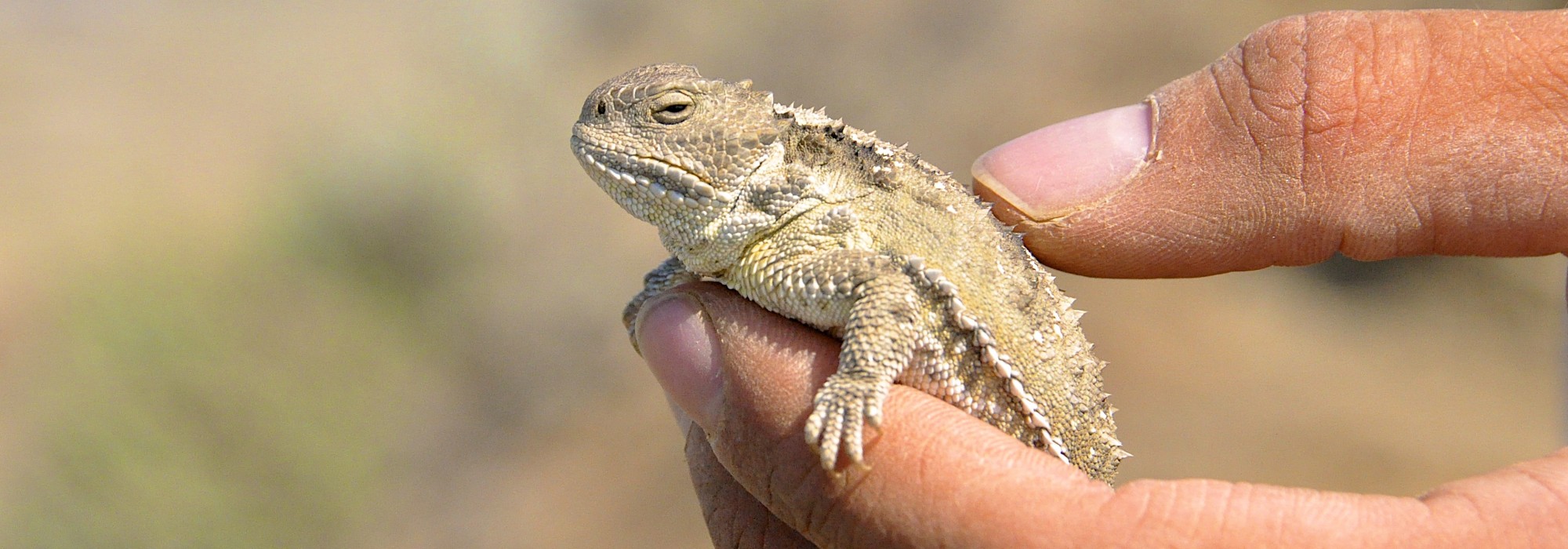
This is the first systematic survey of postnatal ossification patterns throughout any major vertebrate group, and the first to attempt to discern the relationship between these patterns and life history characters. The group of interest is the Squamata, the clade comprised of lizards (including snakes). This project focuses on the development of the skeleton from birth or hatching to maximum size, and the relationship of that development to life history characters such as growth rate and sexual maturity. This approach will help to elucidate the degree of complexity of developmental processes and thus the number of discrete developmental units upon which evolution can act. It will also reveal the amount of phylogenetic information contained in these patterns, at least for the squamate clade. Finally, the documentation of the timing and sequence of these ossification events will greatly aid in the interpretation of the fossil record in terms of the biological age of individual specimens. This should help alleviate the general problem of taxonomic oversplitting due to the naming of different stages of the same ontogeny as different species. That, in turn, will provide a more accurate picture of vertebrate diversity through time, so that its relationship to changing environmental factors can be better ascertained.
This project includes 27 species representing 12 major squamate clades. Its basic framework consists of the detailed description of postnatal skeletal ossification in each of these species. From these descriptions will follow the comparative component. First, the ossification patterns will be coded as characters and mapped onto a phylogenetic hypothesis independently derived from morphological and molecular data. The degree of congruence between the ossification character set and the other character sets will indicate the quality of phylogenetic information in the ossification data. This component of the project has the potential not only to improve hypotheses of squamate relationships, but also to provide all systematists working on vertebrates with an additional line of evidence: ossification sequences.
The second set of comparisons will consider ossification patterns in light of life history characters such as size at birth, size at sexual maturity, maximum size, growth rate, and age at sexual maturity. A wide variety of questions will be addressed, including the following: Do ossification patterns support the theory that the skeleton, from an evolutionary standpoint, is compartmentalized into major integrated regions? How closely do patterns of ossification recapitulate patterns of morphogenesis? What fusions, if any, are consistently reliable indicators of sexual maturity? Are terminal fusions really terminal, that is, do they truly mark the cessation of further significant growth? What is the relationship between ossification rate and growth rate?
In lizards, because they are ectotherms, changes in life history strategies are logically attributable to changes in climate. For example, climatic cooling is considered causal to a longer retention of eggs by the female, which is generally considered to be how viviparity evolves. The shift from oviparity to viviparity has occurred many times in squamate history, yet we currently have no concept of how this affects ossification patterns and, by extension, morphology. This project will provide an important first step toward understanding this link between climate, life history strategy, and morphology.
In summary, the postnatal ossification of the skeleton is an area ripe for inquiry. Not only is it relatively untouched territory, but it also holds much potential for elucidating answers to the some of the most pressing questions in paleobiology today, namely, how does the vertebrate skeleton evolve and how is this evolution related to environmental changes in the earths history? Squamates are an ideal group for the first systematic investigation of these patterns because they have a rich fossil history, a large number of extant representatives, and their phylogenetic relationships are reasonably well established. It is expected that this study will prove rewarding enough to spur similar investigations in other vertebrate groups.
Comparative Analysis of Developmental Anatomy and Growth Patterns In
Embryonic Paleognathes; With Comparisons to Embryonic Neognathes,
Archosaurs and Non-avian Theropods
Cynthia Marshall
Department of Geology & Geophysics
The question of ratite affinities is of classic and enduring interest, but little is known about their growth. Comparative patterns of ratite growth and development are poorly documented. The purpose of this study is to describe and quantify general skeletal growth patterns within ratites focusing on the comparative developmental anatomy of the embryonic skeleton. Using established vertebrate clearing and staining techniques, a pre-hatching, skeletal developmental series is being analyzed. The growth and shape information will be of interest to those studying comparative evolutionary patterns and processes such as heterochrony, as well as those investigating development and growth in either modern or extinct taxa. This information can subsequently be applied to larger questions such as those involving exploration of how these growth patterns may possibly correlate to the ecological adaptive strategies of these birds, or of evolution as it relates to heterochrony, biogeography, and continental movements.
Various Research Projects Dealing With Degradation of
Organic Matter within Rocks and Sediments
Steven Petsch
Department of Geology & Geophysics
I would like to take this opportunity to thank the awardees of the G. Evelyn Hutchinson Award for the financial support I have received towards completing my dissertation research. This year has been a very busy one for me, and the support of the Institute for Biospheric Studies has played no small part in making this busyness possible. For example, I am just returned from the International Meeting on Organic Geochemistry held in Istanbul, Turkey, where I presented much results and conclusions from a study of the chemical weathering black shales.
I think it appropriate to summarize in chronological order the research activities I have been involved with during the past year. Publications and presentation resulting from YIBS support are included at the end of this summary. My academic advisor (Robert Berner) and I were asked last fall to write a Perspectives piece for Science magazine, specifically commenting on work to be published in the same issue on sulfur isotopes and the geochemical sulfur cycle1.
Shortly after this piece was submitted, I began preparing a manuscript for submission to the journal Organic Geochemistry. In this paper, co-authored by Robert Berner and our collaborator at Woods Hole Oceanographic Institution, Timothy Eglinton, I described the work we had to date completed that examines the chemical weathering of black shales2. The manuscript was accepted this spring and should be published by years end.
In January, I began a short study examining the effect of mineral surface area on degradation of organic matter within rocks and sediments, using analytical facilities in the Yale Department of Geology and Geophysics. Although not conclusive, this study strongly suggests a relation between organic matter preservation and association with mineral surfaces.
In March, I spent two weeks working in the laboratory of Malcolm Oades, Department of Soil Science, University of Adelaide, South Australia. Dr. Oades is a world-renowned expert on organic matter in soils with an excellently equipped nuclear magnetic resonance spectroscopy laboratory. We had met at a geochemistry meeting last summer, and he invited me to his lab to apply his NMR techniques to my organic matter samples. At Adelaide, I worked closely with Dr. Oadess post-doctoral research assistant, Ronald Smernik, using the tool of NMR to describe bulk chemical structure variations in organic matter during weathering. Upon return to Yale, I spent several weeks examining our results and preparing a first draft of a manuscript. This manuscript is now nearly completed and only awaits one last revision from the laboratory in Adelaide3.
This past summer, I began a mathematical modeling study of black shale weathering based on estimates of fluid flow and chemical reaction rates. The goal of this study is to recreate as accurately as possible in a model the chemical features I observed in my samples. Results to date have been very satisfying, and I will be preparing a manuscript describing this study in the next few weeks4.
I also presented my work at two meetings this summer: the 5th Geochemistry of the Earths Surface meeting in Reykjavik, Iceland5, and the 19th International Meeting on Organic Geochemistry in Istanbul, Turkey6. The poster and talk were very well received, and the opportunity to travel and meet with the greater geochemistry community allowed me to make contacts with and plan potential collaboration with a variety of researchers with similar interests as mine.
And lastly, I am beginning a new study in collaboration with Robert Berner and Carmela Cuomo, a research associate in the Yale Department of Geology and Geophysics on the influence of atmospheric O2 concentration on carbon isotope discrimination in plants and algae. We began by analyzing the isotopic composition of plants grown at various pO2, and found that there was a significant and consistent isotope variation7. We are now building the apparatus that will allow us to culture several species of algae that are dominant contributors to organic matter in marine sediments at various and controlled pCO2 and pO2. Although it is unlikely that I will be at Yale long enough to see this project to completion, I intend to participate in this study by including compound-specific isotope analysis of algae samples in the post-doctoral research I will begin in a few months at Woods Hole Oceanographic Institution.
Again, I am deeply indebted to the Yale Institute for Biospheric Studies for the financial support I have received. It is because of programs such as these that excellent and important research can result from a graduate students dissertation.
References relating to the YIBS research support:
1. Berner, R.A. and Petsch, S. T. (1998) The sulfur cycle and atmospheric oxygen. Science 282, 1426-1427.
2. Petsch, S. T., Berner, R. A., and Eglinton, T. I. (1999) A field study of the chemical weathering of ancient sedimentary organic matter. Organic Geochemistry, in press
3. Petsch, S. T., Smernik, R. J., Eglinton, T. I., Oades, J. M., and Berner, R.A. (1999) A solid state 13C NMR study of kerogen degradation during black shale weathering. in preparation
4. Petsch, S. T., Berner, R. A., and Chang, S. (1999) Fluid flow and chemical reaction model of organic matter loss and degradation during black shale weathering. in preparation.
5. Petsch, S. T., Eglinton, T. I., and Berner, R. A (1999) Assessing the loss and alteration of organic matter during weathering of black shale: implications for carbon cycling and atmospheric O2-. Proceedings of the 5th International Symposium on Geochemistry of the Earths Surface, Reykjavik, Iceland. 271-274.
6. Petsch, S. T., Eglinton, T. I., and Berner, R. A (1999) Weathering of ancient sedimentary organic matter: Examining the roles of organic matter type and oxidation kinetics. Proceedings of the 19th International Meeting on Organic Geochemistry, Istanbul, Turkey.
7. Berner, R. A., Beerling, D. C., Petsch, S. T. and Lake, J. (1999) Carbon isotopic fractionation during photosynthesis: effect of changes in atmospheric oxygen. Geological Society of America, Abstracts with programs, v. 31.
Jeffrey Chen
Department of Environmental Engineering
Eric Vrijenhoek
Department of Environmental Engineering