History
The seeds of the Project were sown in 2000, when a group of Yale students enrolled in a class about environmental health and policy taught by Professor John Wargo in the School of Forestry and Environmental Studies. As these students learned about the harmful impacts of pesticides on human health and the environment, they became concerned about the food in Yale’s dining halls, and began meeting with Yale’s dining services to discuss increasing the amount of organic food in dining halls. These meetings led to Yale University Dining’s decision to change procurement of several food items from conventional to organic, where this change was cost-neutral. The group of students also formed an organization, “Food From the Earth,” and continued to raise awareness and support for organic food in dining halls. Food from the Earth held meetings and wrote petitions, and their efforts culminated in a 2002 conference called “Farming and Eating in New England.”
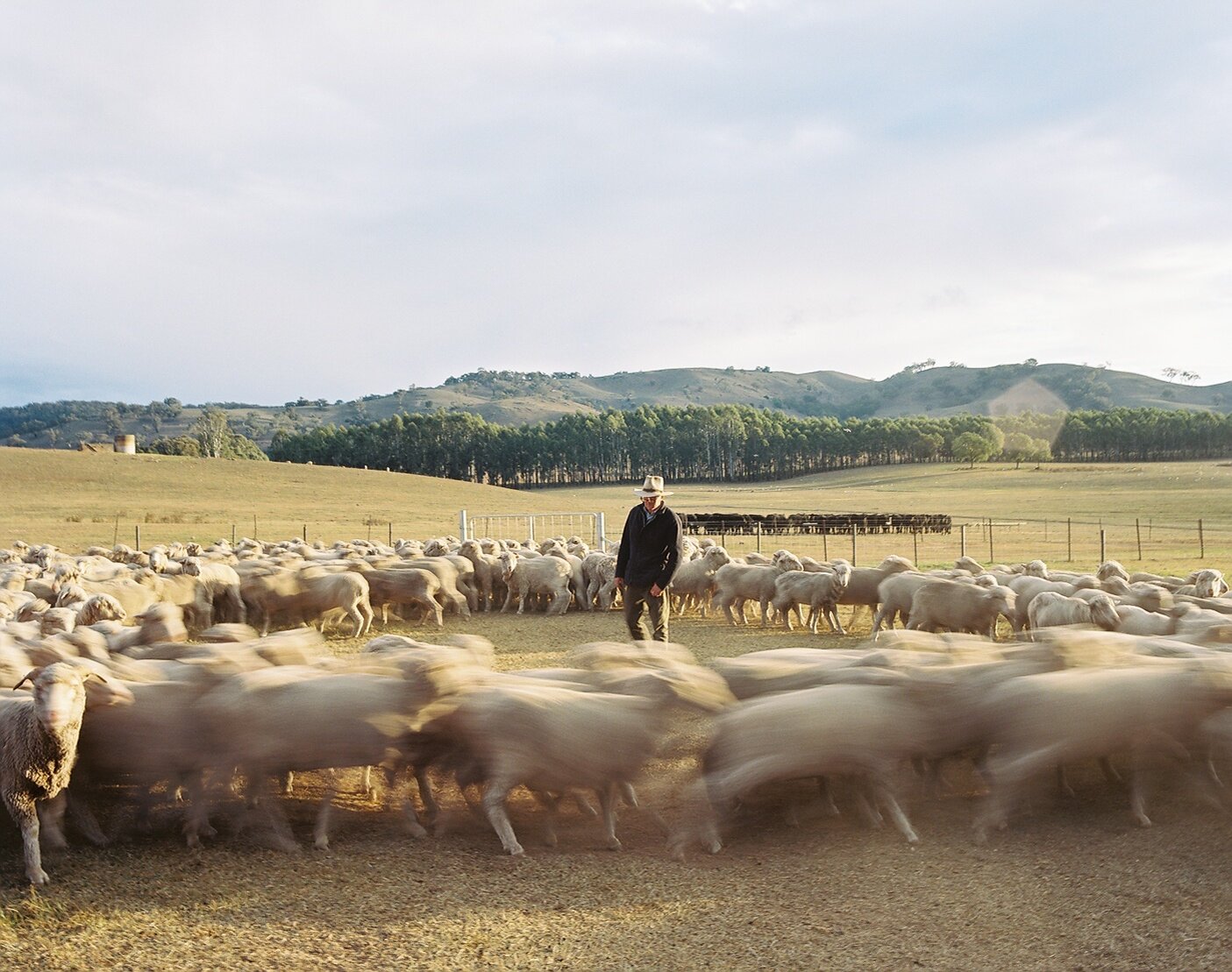
The work of these students was supplemented early on by the interest of Alice Waters, owner of the world famous restaurant Chez Panisse. In 2001 Waters became interested in the culture of food at Yale when her daughter, Fanny Singer, enrolled in the college. A conversation between Waters and Yale President Richard Levin sparked the idea for an ambitious University undertaking: a project encompassing a sustainable dining program, a college farm, university composting, and increased education around food and agriculture. At the urging of Waters and of the students involved with Food from the Earth, the University hired Joshua Viertel, a Harvard graduate who had worked as a teacher, farmer, and shepherd. Viertel would report to the Assistant VP for Student Financial and Administrative Services.
Next, a steering committee was formed in early 2003; it consisted of the Assistant VP for Student Financial and Administrative Services, the Director of Yale Dining, an executive chef, a purchaser, students, and faculty. Together, Viertel and the steering committee created a scope and vision for the initiative and named it the Yale Sustainable Food Project. The Project would include a garden on campus, educational programming around food and agriculture, and a sustainable dining program.
With this ambitious vision before them, the committee tackled the dining program first, inaugurating a pilot project in Berkeley College’s (one of Yale’s twelve residential colleges) dining hall to serve all local, seasonal, and sustainable food. While planning for the change to sustainable food, Viertel and a group of students wrote a proposal for a Yale Farm, and over the course of a semester generated broad-based support for the idea from a wide range of faculty and administration. Viertel and students submitted the Farm proposal (the original document can be found here) to President Levin, and with the approval from the VP of Finance and Administration hired the Yale Farm’s first interns. In the summer of 2003, the interns broke ground at the Yale Farm, and ran a composting pilot to recycle waste from Yale’s dining halls.
As the farm and the dining program were underway, the steering committee was also working to generate broad-based support for this program, and to solidify the strong relationship between the University’s academic work and sustainable food. With these goals to guide them, they conceived of a conference on Yale’s campus, and hired Melina Shannon-DiPietro, a Harvard graduate, teacher, and former consultant, to develop and oversee this project. More than 170 people from 19 schools attended “Tilling the Soil; Turning the Tables” on Yale’s campus. Shannon-DiPietro then came on as co-director with Viertel.
After one year of planning and a summer of staff training, Berkeley’s doors opened in the fall of 2003 with a full seasonal and sustainable menu. Seasonal menus and recipes were written to reflect local availability of different foods throughout the year. Initially, a limited number of local farmers delivered food directly to Berkeley College; over time, better distribution networks and relationships with cooperatives were set up to facilitate supply on a greater scale. Berkeley dining hall staff were trained to successfully execute recipes involving raw ingredients—a radical shift from the type of food preparation to which they were accustomed. The pilot was a huge success: it demonstrated both that sustainable food was wildly popular with students, and that serving a sustainable menu was operationally possible in all of Yale’s dining halls. With this knowledge, and because of the program’s overwhelming popularity, the Project expanded in 2004 to incorporate some sustainable food in the menus of all college dining halls.
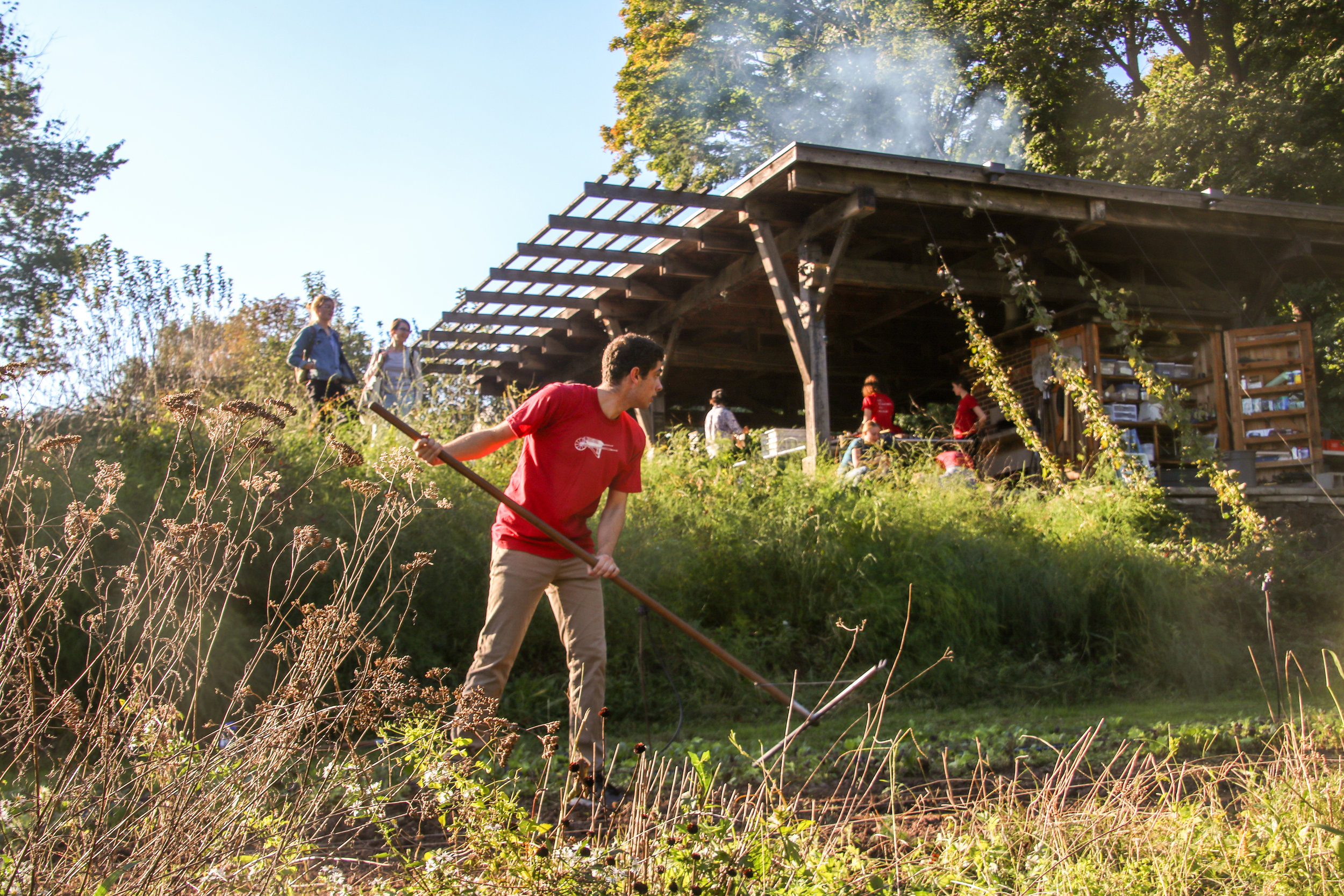
As staff in the Berkeley College dining hall were training and preparing for the transition to sustainable food, student interns were working to transform a brambly acre of sod on the northern edge of campus into a productive market garden. In the summer of 2003, students harvested the Farm’s first vegetable crop and began selling their produce at the New Haven farmers’ market. Over the past five years, the farm has become a place where students, staff, and area residents gather to eat, work, and learn. Each summer, six undergraduates spend their summer as Yale Farm interns, learning the theory and practice of sustainable agriculture through work, classes, and field trips.
In 2005, summer interns helped a team of artisan masons build a wood-fired hearth oven at the farm, made with reclaimed wood and stone. When the weather permits, the oven is used regularly for cooking and baking. The Yale Farm is a four-season market garden; cultivation continues through the winter in an unheated hoophouse. Weekly workdays throughout the year are run by student farm managers, who teach and direct volunteer farm work. Workshops are held regularly at the farm, on topics ranging from bread-baking and fruit preserving to winter growing and pruning. The farm also hosts seasonal festivals, like a fall Harvest festival and a spring pig roast.
As the Farm grew, so did the dining program. In 2004, twenty percent of the food in each dining hall was sustainable. In 2006, Berkeley’s role as a pilot was ended, and the percentage of sustainable food was increased in each of the colleges. All Yale’s college dining halls now serve the same menu, and sustainable food is available in each of them, at every meal. In 2007 Rafi Taherian took over as the director of Yale Dining, at which point the Project shifted its focus from sourcing and meal planning to running educational programs for Yale students on issues surrounding food and agriculture. The Project now works with Dining on educational events but does not participate in sourcing ingredients for the dining halls.
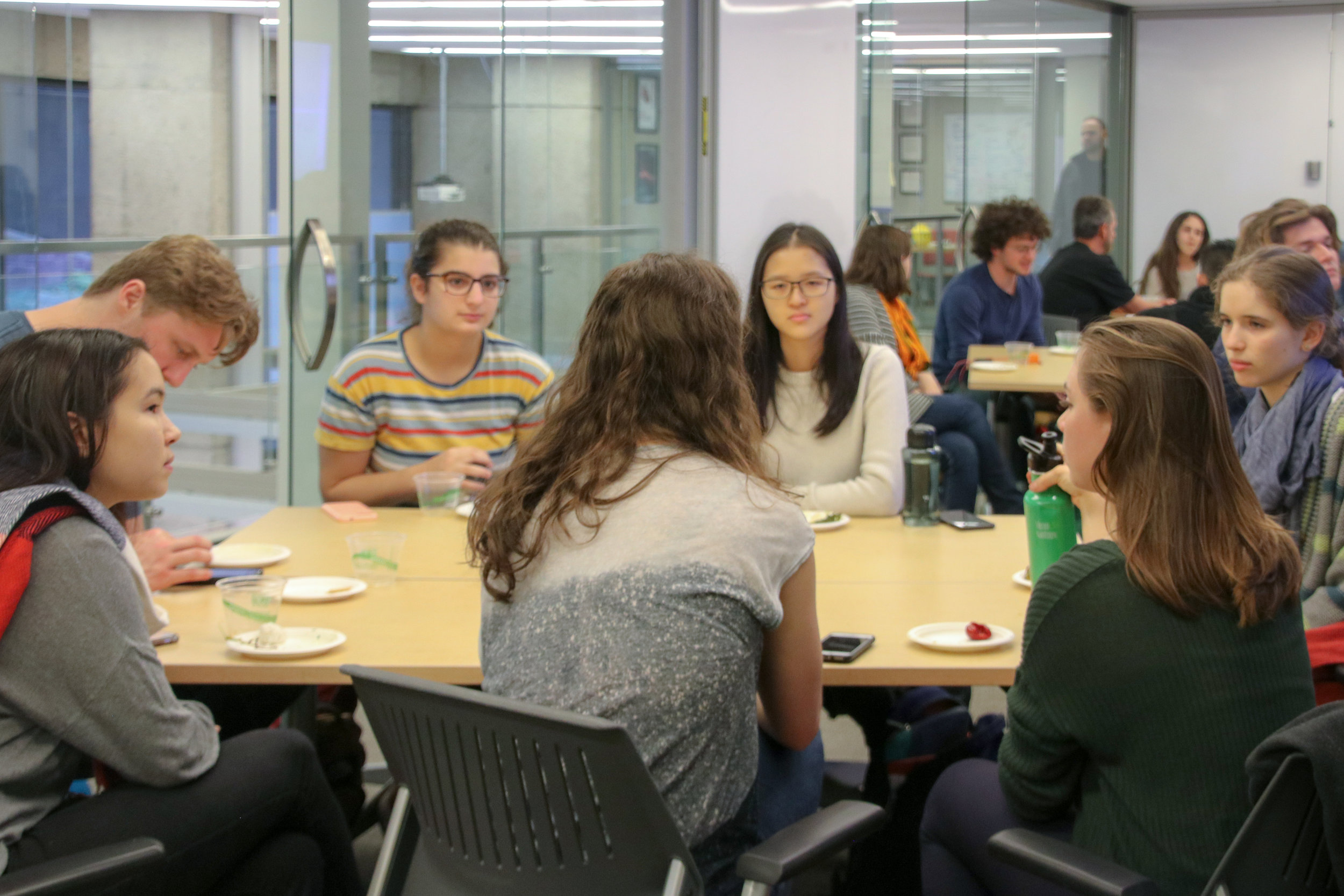
In 2006, the Project began running a series of educational events, known on campus as the Chewing the Fat speaker series, in an effort to increase the portion of Yale’s academic and extracurricular landscape devoted to food and sustainable agriculture. These events comprise speakers, films, workshops, and field trips. Also in 2006, the Project began administering the pre-orientation program Harvest, formerly an offshoot of FOOT, Yale’s backpacking pre-orientation program. On Harvest, upperclassmen lead trips of 8-10 freshmen on family-owned, organic farms in Connecticut for five days before the start of on-campus orientation.
In its first few years, the Sustainable Food Project supported the student organization Food From the Earth, which played an important role in organizing events which created a culture of food and agriculture on campus. In the last several years, the Sustainable Food Project’s educational programs have grown, as funding and staff has as well. In 2005, Lucas Dreier, a Yale graduate who had been involved in the original proposal for the Project, joined Viertel and Shannon-DiPietro as a full-time staff member. In 2006, with the generous support of the Lazarus Family, the Project created the Lazarus Fellowship, a two-year position for a recent Yale graduate who serves as the Project’s Program Coordinator. The Project also employs roughly 20 paid student interns during the school year, who create and run programs and events, working on everything from running farm workdays to managing the office to writing copy for printed materials.
In 2008, Josh Viertel left the Project to become President of Slow Food USA. Melina Shannon-DiPietro assumed full responsibilities of directorship. In late 2010 Melina moved to New York to work as the Director of Food Programs at Friends of the High Line; Mark Bomford took over as Director of the program in the fall of 2011.
Since its founding, the Sustainable Food Project has also actively encouraged and supported the development of Yale courses related to food, agriculture, and sustainability, in departments as diverse as Psychology, Biology, and History. The Project’s directors taught a college seminar in 2005 on “The Practice of Farming Well,” and have served as guest lecturers and co-instructors in other courses. In 2007, due to student demand, the program in Environmental Studies formalized a concentration in food and agriculture within its major. One of the Project’s major areas of focus in the coming years is to continue to collaborate with the administration to increase education at Yale related to food and agriculture, bolstering the number of faculty teaching these subjects and the number of courses taught on them.
More information tracing the development of the Yale Sustainable Food Project is available in our press gallery and our past annual reports.
Historical Documents
Proposal for Yale Farm (.doc)
Appendix to Yale Farm Proposal (.doc)