Yale University Home Page
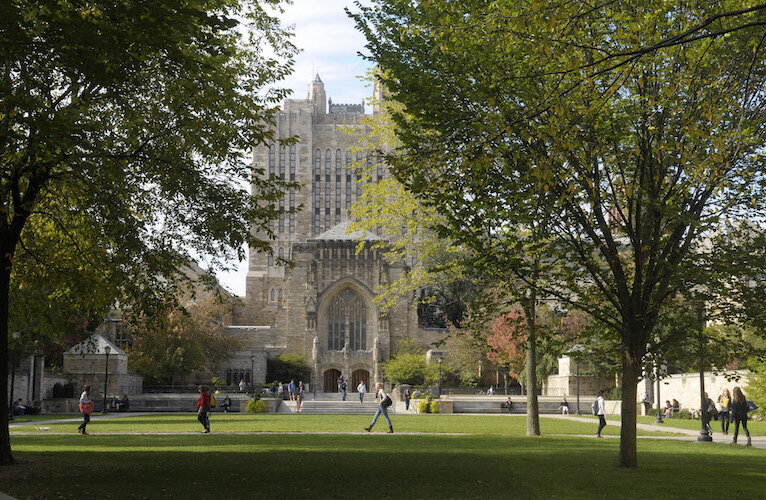
Yale Campus Photo
nav panel image
Office of the Provost
nav pointer
spacer
top
top
top
top
top
top
top
top
top
top
top
top
top
top


Policies
Selected University Policies

Policies for Postdoctoral Appointments

Download PDF version:

Postdoctoral appointments afford recent Ph.D. (and equivalent advanced degree) recipients a period in which to extend their education and professional training. The opportunity to carry out postdoctoral studies in a research environment such as provided at Yale University can significantly broaden an individual's expertise, provide a period of more independent scholarship, and help define future career paths. The breadth of the academic community, together with the physical resources in the libraries and laboratories, make Yale University a particularly rich environment for postdoctoral training. In addition to deriving individual benefits, postdoctoral appointees make important contributions to the research mission of Yale University.

This document presents general policies that affect the two categories of appointees: Postdoctoral Fellows and Postdoctoral Associates*. In most cases the difference arises because of the funding source. Appointees funded from Yale-administered research grants or contracts in order to provide essential services related to the supported research are classified as Postdoctoral Associates; they are employees of the University even though they are considered trainees. Postdoctoral Fellows are also trainees, but they are not Yale employees. They may be funded either from training grants to the University or directly from an outside source. Appointees funded from University sources that are neither research nor training grants may be classified either as Postdoctoral Associates or Postdoctoral Fellows, but they must be classified as Postdoctoral Associates if they are required to perform services for the University.

Button Terms of Appointment
Button Benefits

Button Expectations for Training

Button Administrative Support
Button Complaint Procedure

1. Terms of Appointment

1.1 Eligibility: To be eligible for a postdoctoral appointment, an individual must hold a Ph.D., M.D., J.D., D.V.M., D.N.Sc., or equivalent degree from a recognized institution of higher learning. When a candidate has completed all of the requirements for a degree, but the degree has not yet been formally conferred, the candidate may present evidence of completion of the degree, together with a statement of the date on which the degree is to be conferred. If the degree is not conferred by the projected date, the postdoctoral appointment shall be terminated. Postdoctoral appointees must be affiliated with a primary academic department or equivalent academic unit.

The candidate must also provide an up-to-date curriculum vitae and list of publications, and must arrange for at least two letters of recommendation to be sent to the prospective faculty supervisor at Yale.

1.2 Appointment letter: Each new postdoctoral appointment is to be made in writing by a letter from the supervising faculty member. The letter must have the approval of the departmental chair or the appropriate dean in the case of professional schools, though the precise mechanism for obtaining this approval is left to the discretion of the department or school. Final administrative approval must also be obtained from the appropriate postdoctoral office (see below). The appointment letter must include the following details:
(i)the term, title, and schedule (full time or fractional) of
the appointment;
(ii)the level of stipend;
(iii) the source of support;
(iv)benefits provided;
(v) a statement of the expected obligations of the
appointee during the training period (this statement
may refer to a general area of study, and need not
define a particular project);
(vi)a statement of teaching responsibilities, if any,
associated with the appointment (note that any
appointee who will be teaching must also be
appointed as a lecturer or equivalent academic rank);
and
(vii)a copy of these Policies for Postdoctoral
Appointments.

Additional information, e.g., the possibility and conditions for renewal, may also be included. The postdoctoral appointee must acknowledge the terms of the appointment, either by signing the letter of appointment or by submitting a separate letter of acceptance.

1.3 Stipend level: The University shall establish each year a recommended minimum annual compensation for postdoctoral appointments. Currently, the minimum stipend is the same as that set by NIH for first-year fellows. Specific information about the minimum stipend will be posted on the Grants and Contracts websites and may also be obtained from the Postdoctoral Office. Ordinarily postdoctoral appointments are for full-time employment. If a fractional appointment is made this must be clearly stated, with the understanding that the appointee may perform and be compensated for additional University services or outside employment, up to but not exceeding full time. Moreover, evidence must be provided that such a fractional appointment is consistent with the rules of the funding source and with the visa requirements of appointees who are not U.S. citizens or permanent residents.

1.4 Maximum term: Individuals generally hold postdoctoral appointments at Yale University for no longer than four years. Extensions may be granted in exceptional cases by the appropriate dean in the case of professional schools and by the Provost in the case of FAS departments. The total term of postdoctoral appointments may not exceed six years.

1.5 Notice of resignation: If a postdoctoral appointee resigns prior to the end of the appointment, he or she will provide at least one month's notice. Postdoctoral appointees must leave all research materials with the faculty supervisor to ensure continuation of the project and compliance with relevant University and sponsor policies. However, access to these data and materials will be provided to the appointee.

2. Benefits

2.1 Health and Dental Coverage: As employees of the University, postdoctoral associates are entitled to fully or partially subsidized membership in one of the available health plans offered by Yale, for themselves, their families, and same gender domestic partners. Postdoctoral fellows are eligible to enroll in the same health plans, and this membership may be subsidized in whole or in part, to the extent that funds for this purpose are included in the fellowship or are supplemented by the faculty supervisor or the department. Postdoctoral appointees are also eligible to enroll in dental coverage made available by the University on the terms offered to M&P employees and members of the faculty.

2.2 Teacher preparation: A postdoctoral appointee may participate in teacher preparation activities sponsored by the school with which the appointee is affiliated and, when appropriate, the Graduate School of Arts and Sciences.

2.3 Vacations and holidays: Postdoctoral appointees are entitled to stated University holidays. In the event that an appointee's funding source specifies vacation and/or holiday provisions, the terms of the funding source shall apply.

2.4 Leaves: Postdoctoral appointees may be granted up to six weeks of paid maternity leave. In addition, unpaid leave may be granted for up to sixteen calendar weeks in year one and up to twelve weeks in year two in any two-year period in the following circumstances: serious illness of the appointee; birth or adoption of a child; care of a seriously ill child, spouse, or parent. Proposals for these and other exceptional leave arrangements should be forwarded by the appointee's advisor to the appropriate dean in the case of professional schools or to the Provost in the case of FAS departments. In the event that an appointee's funding source specifies leave provisions that differ from those stated above, the terms of the funding source shall apply and where necessary the leave proposal shall also be sent to the funding agency.

2.5 Career services: A postdoctoral appointee may participate in career development workshops and other activities (except interview events designed solely for degree students) sponsored by the school with which the appointee is affiliated and, when appropriate, the Graduate School of Arts and Sciences.

2.6 Auditing University courses: Postdoctoral appointees and their spouses are eligible for the same University course auditing benefits as are faculty, as described in Sec. VIII.D.1.k of the Faculty Handbook.

2.7 Tuition benefits: Postdoctoral appointees whose appointment is at least half time are also eligible for the same tuition benefits as are faculty, as described in Sec. VIII.D.1.l of the Faculty Handbook.

2.8 Facilities: An appointee is entitled to use departmental facilities, the University's computer facilities, and the libraries. An appointee has access to the athletic facilities on terms usual to faculty and staff, and is eligible for parking privileges with a limited allocation priority.

3. Expectations for Training

3.1 Mentor responsibilities: The supervising faculty member is expected to be a mentor to the postdoctoral appointee, providing training and supervision. As part of the annual reappointment process the mentor is expected to write an evaluation or progress report of the postdoctoral appointee's activities in a manner that is clear and timely. These reports should be provided to the appointee and forwarded to the relevant postdoctoral office. Mentors have the responsibility to provide an appropriate educational experience that helps to advance the career of the postdoctoral appointee.

3.2 Appointee responsibilities: The postdoctoral appointee is expected to:
(i)fulfill specific research and training objectives;
(ii)conform with ethical research standards of the
University;
(iii)comply with all relevant federal, state and municipal
regulations and guidelines that relate to human
subjects
research, the care and use of laboratory
animals, and the use of hazardous materials;
(iv)comply with all relevant University policies; and
(v)record and document research results appropriately.

If the appointee will be engaged in other specific activities, such as teaching, these expectations should be stated in the letter of appointment or in a subsequent written communication.

3.3 Outside employment: A postdoctoral appointee who holds a full-time appointment may spend no more than one day per seven-day week on average on outside employment activities such as consulting. These activities must comply with all relevant University policies including those on conflict of interest, conflict of commitment and intellectual property. In addition, such employment should be discussed with the faculty mentor, must not interfere with the primary research and training obligations, and must comply with the rules of the funding source.

3.4 Teaching at Yale or at other institutions: Some postdoctoral appointments include a role in teaching. For those that do not include such a role, the appointee may receive compensation in addition to the stipend, for teaching at Yale or at another institution, up to the equivalent of one course per year, with the approval of the faculty mentor and when allowed by the funding source. This is an exception to the rule applicable to faculty and staff which prohibits teaching at another institution or receiving extra compensation for teaching at Yale. The exception is granted because participation in teaching can provide important professional experience and training to postdoctoral appointees. Any such teaching activity must comply with the time limits discussed in 3.3 above.

4. Administrative Support

4.1 Departmental role: Each department or school that makes postdoctoral appointments shall designate a faculty member as Director of Postdoctoral Affairs (DPA), to oversee the appointment procedures and to serve as a resource to faculty on postdoctoral policies. The DPA is expected to provide guidance and support to the postdoctoral appointees in the department and to serve as a link to the University-wide postdoctoral offices. Administrative support shall be provided by the department or school.

4.2 Postdoctoral offices: Two administrative offices for postdoctoral appointments will serve the community. An office in the School of Medicine will serve postdoctoral appointees in that school. Another office, located in the Provost's Office, will serve postdoctoral appointees in FAS departments and in the other professional schools. These offices supplement the role of the departments and schools in implementing policies and procedures related to the appointment, roles, requirements and responsibilities of all postdoctoral appointees in the respective FAS departments and professional schools. Areas in which the offices provide assistance and oversight of compliance with University policies include:
· Initial appointment and reappointment
- Authorization (levels and sources of support)
- Approval and processing
- Stipend and data change monitoring
- Visas (coordination with Office of International
Students and Scholars)
· Policy administration
- Leaves, benefits, termination, grievance, resignation
- Research compliance (coordination with other
University offices)
· Support functions
- orientation
- career counseling
- workshops (coordination and oversight)

5. Complaint Procedure

A Complaint Procedure for Postdoctoral Appointees is available for individuals who believe they have been treated in a manner inconsistent with University policies, or that they have been discriminated against or have been inappropriately disciplined for misconduct. Complaints of academic fraud/scientific misconduct must be brought under the "Policies and Procedures for Dealing with Allegations of Academic Fraud at Yale University" (see http://www.yale.edu/grants/acadfraud.html). Complaints of sexual harassment must be brought under either the School of Medicine's or the Graduate School's sexual harassment complaint procedures.

The full complaint process consists of the following steps:

5.1 Informal resolution at the departmental level through the departmental Director of Postdoctoral Affairs (DPA), the chair of the department and/or the dean of the school.

5.2 Informal resolution by a designated postdoctoral advocate attached to each of the two postdoctoral offices.

5.3 Formal grievance to a Postdoctoral Grievance Committee appointed by the Provost or by his or her delegate.

* This document does not address all categories of appointments called "fellows." It does not apply to clinical fellows, who are subject to certain agency-mandated requirements and are covered by separate policies. In addition, the University uses the term "fellow" for other categories not covered by this document, e.g., residential college fellows and participants in advanced fellowship programs offering stipend support (e.g., Liman Fellows and Bernstein Fellows).


Policies Provost Home The Offrice The Faculty Site Map