 |
|
 |
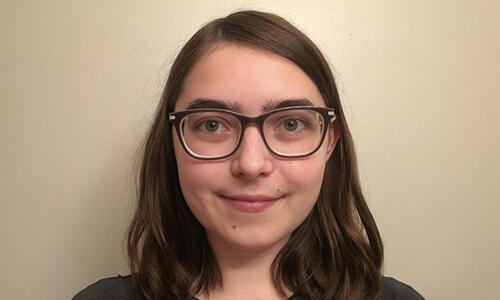
Valerie Horsley, Ph.D.
B.S. Furman University 1998
Ph.D. Emory University 2003 |
Our lab studies the cellular and molecular mechanisms
that control stem cell activity and function
within epithelia, the tissues that line our
internal organs and outer surfaces. We use
the mouse as a genetic model system to study
how adult
stem cells within epithelial tissues
maintain tissue homeostasis, wound healing
and can contribute to cancer formation.
The primary epithelial tissue we use is the
mammalian skin, which contains multiple stem
cell populations and forms a complex tissue
that protects our bodies from external pathogens
and loss of internal bodily fluids. Mammalian
skin is an excellent model to study stem cell
biology because the epidermis and its appendages
are in a constant state of regeneration, which
is actively sustained by tissue stem cells. During
development, a stratified epithelium forms
from a single layer of cells which give rise
to primarily three lineages: the epidermis, the
hair follicle and its associated sebaceous gland.
Following tissue formation, stem cell activity
including proliferation and commitment to various
cell lineages is crucial for the rapid turnover
of the epidermis and the sebaceous gland as well
as the cyclic regeneration of the hair follicle.
We are currently addressing the following topics:
» Control of cell proliferation in
epithelial stem cells
» Regulation of cell fate choices
within epithelial tissues
Stem Cell Proliferation.
The hair follicle stem cells reside in the bulge
region of the follicle and are characterized
by their slow proliferation, which can be marked
by their ability to retain DNA label such as
bromodeoxyuridine, BrdU. We have identified a
role for the calcium sensitive transcription
factor, NFATc1 in the regulation of stem cell
proliferation and activity in the hair follicle
bulge. Inhibition of NFATc1 activity pharmacologically
or via gene knockout results in precocious activation
of the stem cells within the hair follicle and
subsequent hair growth. We are identifying mechanisms
that control NFATc1 activity in hair follicle
stem cells. In addition, we will define further
mechanisms that regulate stem cells within the
skin and other epithelial cells.
Lineage formation. How
do stem cells decide to which cellular fate
to adopt? The skin is an excellent system
to answer this basis question in developmental
biology. The epithelium of the skin is composed
of three primary lineages, the epidermis,
hair follicle and sebaceous gland. We have
identified multiple transcription factors
that regulate lineage formation in the skin.
One of these factors, Blimp1 is a transcriptional
repressor that marks a unipotent stem cell
population in the sebaceous gland. We are
utilizing Blimp1 expression as a means to
further understand how sebaceous glands form
and contribute to human diseases. Future
studies are planned to identify further mechanisms
involved in lineage decisions in epithelial
cells.
Selected Publications
V. Horsley, A. O. Aliprantis,
L. Polak, L.H.Glimcher and E. Fuchs. (2008).
NFATc1 balances quiescence and proliferation
of skin stem cells. Cell. 132(2):299-310.
E. Fuchs and V. Horsley (2008)
More than one way to skin... Genes
and Development. 22(8):
976-85.
C. Blanpain, V. Horsley, and
E. Fuchs. (2007) Epithelial Stem Cells: Turning
over New Leaves. Cell.
128(3): 445-458.
V. Horsley, D. O'Carroll, R.
Tooze, Y. Ohinata, M.Saitou, T. Obukhanych,
M. Nussenzweig, A. Tarakhovsky and E. Fuchs.
(2006). Blimp1 defines a novel progenitor population
that governs cellular input to the sebaceous
gland. Cell. 126(3):597-609.
top |
 |
|