NEW Environmental Studies DUS
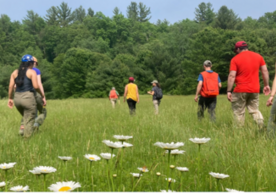
The Environmental Studies Program would like to welcome our new Director of Undergraduate Studies, Paul Sabin, Assistant Professor of Environmental History.
Professor Sabin will be holding office hours every Tuesday from 1:30-3:20PM in HGS 2677 Entryway A (Walk
through metal gates at HGS, and turn left under archway across courtyard to Entryway A.) during the Fall 2009 semester.
NEW Spring 2010 seminar courses being offered in Environmental Studies
The Environmental Studies Program will be offering eight new junior seminar courses for 2009-2010.
Spring 2010
EVST 200b/G&G 200b, Earth System Science: A Survey of Geoscience
Instructor: Jeffrey Park
MW 9:00-10:15am
A survey of geoscience. Interaction of lithosphere, hydrosphere, atmosphere, and Earth's deep interior; natural controls on environment and climate in past, present, and future; rocks, minerals, glaciers, earthquakes, and volcanoes; natural hazards and natural resources.
EVST 355b/PLSC 200b, Political Economy of Environmental Policy
Instructor: Susan Rose-Ackerman
T 1:30-3:20pm
Tensions between economic analyses and political realities of environmental problems. Roles of the legislature, the executive, and the courts; federalism and the democratic potential of participatory policy making. Focus on the United States, with selected international cases.
Prerequisites: introductory microeconomics and a course with a substantive policy focus.
PRE-REGISTRATION PROCESS: For those interested in enrolling in this seminar, please submit the following information to Deborah Broadwater (deborah.broadwater@yale.edu) by 12/4/09:
- A brief statement about your background, course work and internship or work experience in environmental areas
- NOTE: Keep in mind that the prerequisites for this seminar are one course in environmental economics/microeconomics and a course in environmental policy.
For more information about these seminars and other courses being offered in the EVST Program, please click here.
Information about Environmental Studies core courses for majors
Please note that the EVST Group B core courses, EVST 262, Ecology and Conservation and EVST 263L, Ecology and Conservation, will not be taught in 2009-2010.
If EVST majors wish to fulfill their ecology Group B core course and lab requirement in 2009-2010, then it is suggested that students take E&EB 220a, General Ecology during the fall term with and substitute the Group B core ecology lab with another scientific lab course (i.e. chemistry, geology, biology). Remember to consult with EVST DUS about any lab substitutions.
Additionally, majors may fulfill the ecology Group B core course and lab requirement by taking EVST 275b and EVST 276Lb during the spring term. Undergraduate enrollment in EVST 275b and EVST 276Lb is limited to 15 students.
Application to the Environmental Studies Major
Apply by February 1, 2010 for the Class of 2012
The Environmental Studies Program requires that all students intending to be
Environmental Studies majors apply at the end
of their sophomore year. Admission to the
major is by application.
If interested in applying to the Environmental Studies major, please submit the following materials to Debbie Broadwater, Program Manager, Environmental Studies Program: deborah.broadwater@yale.edu or Kroon Hall Room G04, 195 Prospect Street.
- Applicant’s name, address, phone number and email address.
- A current resume.
- A transcript (official or unofficial) of work at Yale that includes a listing of spring 2010 courses.
- A statement of purpose indicating academic interests and a proposed area of individual concentration.
This year applications will be due by Monday, February 1, 2010. A committee of EVST faculty will review proposals and successful applicants will demonstrate commitment to the major, focus within the proposed concentration (by discipline and issue or problem), academic performance, and clarity of plans to complete all course requirements. It is not necessary to have completed all prerequisites or core courses by the time of application. Recommendation letters are not needed.
Top