Impact through original research
When I began work on my PhD at the University of British Columbia
in January 1972, I was advised to spend a year reading and
thinking deeply before deciding on the direction I would take
in my thesis. I followed that advice, and out of that year
of reflection came a 1976 paper in Quarterly Review of Biology
on
It was the introduction to my thesis proposal; it launched
my career; it helped to define a field; and it earned me a
Miller Fellowship at Berkeley, where I spent three years enjoying
the freedom to read and think broadly (1975-1978). The issues
raised in that paper shaped many of my subsequent contributions.
How are organisms designed by natural selection to maximize
reproductive success in the face of ecological problems? What
is the role of phenotypes in evolution? Those two questions
have guided much of my work.
While at Berkeley I wrote
- Modest advice for graduate students,
my most read, least cited, and possibly - some think- my most
helpful contribution (see: Some Modest
Advice for Graduate Students). The data I gathered
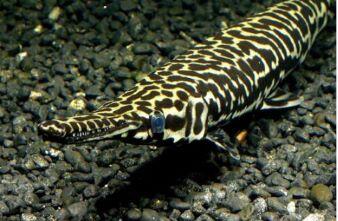
for my PhD at British Columbia concerned the rapid evolution
of life histories in mosquito fish from the time they had
been introduced to Hawaii in 1905 up to the time I sampled
them in the early 1970's. At Berkeley and in my first academic
position - assistant professor at Reed College - I continued
this work on mosquito fish. It resulted in two major conclusions:
- Evolution can be very rapid when large populations
are subjected to strong selection. This was one of several
contributions that changed minds about the tempo of evolution,
which had previously been thought to occur on scales of
thousands to millions of years. We saw it happening within
decades, and soon it would be observed in laboratory experimental
evolution on a timescale of months to years. The problem
became not how fast can evolution be, but why is it sometimes
so slow? The terms of the debate shifted.
- Gene flow can swamp local adaptation, resulting in
mal-adaptation of local populations. This early empirical
contribution to the consequences of gene flow is now reflected
in thinking about evolution in geographically structured
populations and meta-populations - very much an ongoing
endeavor. We showed that geographic structure had placed
major constraints on the rate of adaptation in a local population.
While at Reed I collaborated with a physicist, Richard Crandall,
to develop the first predictions of how evolution should shape
plastic responses to heterogeneous environments. My work with
Crandall on
- predicting optimal reaction norms for age and size at
maturity
was further developed with Jacob Koella when I moved to Switzerland
in 1983 to take over the directorship of the Zoology Institute
at the University of Basel. The 1986 paper with Koella, now
seen as a good start but a partial truth, helped to inspire
research on the evolutionary significance of developmental plasticity
through the 1990's. Its implications for population dynamics
and community ecology are still being explored. In
Basel I switched my empirical system from mosquito fish to
fruit flies and continued to work on them for the 17 years
I spent in Switzerland. In the early years we took a quantitative
genetic approach to life history evolution and addressed questions
about the constancy of the genetic variance-covariance matrix,
constraints on the evolution of phenotypic plasticity, and
the controls needed for experiments in which genetically engineered
organisms are used to test ideas about the evolution of aging.
From that period - roughly 1985-1995 - emerged the following
conclusions:
- Phenotypic plasticity can change the sign of a genetic
correlation between two traits from positive to negative
across environments. Such strong effects were not expected,
and their consequences have not yet been fully assimilated
by evolutionary theory. At the time, it was widely thought
that the genetic variance-covariance matrix was constant
across environments. Our work showed that at least sometimes
it is not.
- Selection on a trait in one environment substantially
shifts its expression in another environment. Falconer
had gotten a similar result in mice; in confirming it in
flies we gave a result that he had interpreted as part of
quantitative genetics new significance for the evolution
of phenotypic plasticity in life history traits.
- Both insert position and genetic background have significant
interactions with genetic transformation. Therefore,
when testing a genetically transformed organism for effects
on whole-organism traits, one must measure position and
background effects. In doing that, we demonstrated that
claims that lifespan could be extended by 30-40% with single-gene
transformations were spurious. The lesson appears to have
sunk in. Recent work on aging in molecular genetics labs
now usually has such controls.
- Traits with greater impact on fitness appear to be
more strongly canalized against the genetic perturbations
caused by transformation. This was one of the few empirical
results at a time when the issue of canalization, buffering,
and the robustness of the developmental system was being
resurrected after several decades of neglect. Its meaning
is not yet clear, for theoretical work is steadily increasing
the number of alternative interpretations of canalization.
In 1987 I published the idea of
and reviewed the range of situations in which they appear to
exist. A selection arena is a selection process that occurs
inside an entity that is a unit of selection in its own right
at a higher level. Here natural selection has produced an adaptation
that uses natural selection to achieve its effect. Since 1987,
selection arenas have been discovered sorting oocytes in human
ovaries and zygotes in human wombs, and I have discovered that
Darwin had the idea in the 1870's. My later years in
Basel - 1993-2000 - were centered around a 7 year long evolutionary
experiment on life history evolution and aging done with fruit
flies. That experiment
- confirmed a major prediction of life history evolution
and the evolutionary theory of aging: an increase in adult
mortality selects for increased reproduction early in life
and a shorter life.
The change in life span that we observed in flies - 5 days
within 100 generations - would correspond in humans to a change
in life span of 5 years since the Trojan War. This result
inspired one of my graduate students, Martin Ackermann, to
do a similar experiment on a bacterium, Caulobacter, that
reproduces asexually by asymmetrical division. His work helped
to
- settle an important controversy about what kinds of organisms
should age.
Martin showed that Caulobacter ages, and its rate of aging
responds to an increase in adult mortality by increasing,
just as it does in fruit flies. Thus it now appears that any
organism that divides asymmetrically must age, and while the
rate of aging may evolve more slowly than do other life history
traits, it still evolves rapidly enough to measure in the
laboratory - more rapidly than had been expected.
Since moving to Yale in 2000, I have published
- a genomic hypothesis for the origin of tradeoffs.
Tradeoffs exist whenever an evolutionary change in one trait
that improves fitness is linked to an evolutionary change
in another trait that decreases fitness. Tradeoffs are virtually
ubiquitous, constrain multitrait evolution, and are key elements
of phenotypic design. Their proximate causes remain in many
cases mysterious, and by using a genomic approach we may be
able more rapidly to identify those proximate causes.
I am currently engaged in issues of hierarchical selection
and genetic conflicts, in one case using them to understand
why woolly adelgids, which have a complex alternation of sexual
and asexual generations, only produce one egg and then die
after having reproduced sexually. Why not two eggs, or more?
The answer appears to lie in the potential for conflict that
genetically diverse sibs would bring to the construction of
the refuge in which the next, asexually-produced generation
lives. Adelgids are small, obscure relatives of aphids, but
the issues they face resemble those addressed in my plan for
the Fellowship.
Impact through books and reviews
I have had as much impact through my books and review articles
as I have had through my original research. Here I list the
books and most important reviews:
As sole author:
- The evolution of life histories. 1992. Oxford University
Press. This, my most influential book to date, was written
in a style and at a level that many found accessible and
appeared at a time when the subject was starting to attract
interest in neighboring disciplines, such as behavioral
ecology and physical anthropology.
As co-author:
- Watching, from the edge of extinction. 1999. Yale
University Press. My wife, Beverly Peterson Stearns, is
first author. We interviewed people around the world on
their reactions to watching their study populations or species
go extinct. The book won a prize from Women in Communications.
- Evolution: an introduction. 2000 (2nd. Ed. 2005).
Oxford University Press. Rolf Hoekstra is second author.
This introductory text aims to move the teaching of evolution
earlier in the undergraduate curriculum by presenting key
issues clearly and concisely while holding mathematics and
population genetics to the necessary minimum. It has sold
well.
As editor:
- The evolution of sex and its consequences. 1987.
Birkhaeuser, Basel. This had impact primarily in Europe:
it was not well marketed in North America. Several chapters
continue to be cited, but I was disappointed in the outcome.
- Evolution in health and disease. 1998. Oxford University
Press. This resulted from a conference I organized in 1996
that aimed to put Darwinian medicine on a more rigorous
foundation. It has sold well and has been influential worldwide. The second edition is in preparation and will appear in 2007.
- Evolution Illuminated: Salmon and their relatives.
2004. Oxford University Press. Andrew Hendry (McGill University)
is senior editor. This book aims to show evolutionary biologists
what salmon can teach them and salmon biologists what they
can learn from evolution. It is too soon to assess its impact.
Important review articles:
- Stearns, S.C. 1976. Life history tactics: A review of
the ideas. Quarterly Review of Biology 51: 3-47.
- Stearns, S.C. 1977. The evolution of life-history traits:
A critique of the theory and a review of the data. Annual
Review of Ecology and Systematics 8: 145-171.
- Stearns, S.C. 1989. The evolutionary significance of phenotypic
plasticity. Bioscience 39: 436-445.
- Stearns, S.C. 1989. Tradeoffs in life-history evolution.
Functional Ecology 3: 259-268.
- Stearns, S.C., G. de Jong, and R. Newman. 1991. The effects
of phenotypic plasticity on genetic correlations. Trends
in Ecology and Evolution 6: 122-126.
- Stearns, S.C. 1994. The evolutionary links between fixed
and variable traits. Acta Paleontologica Polonica 38: 215-232.
- Stearns, S.C. 2000. Daniel Bernoulli (1738): evolution
and economics under risk. Journal of Biosciences 25: 221-228.
- Stearns, S.C. 2002. Darwinian Medicine. Introductory Essay
In M Pagel (ed.), Oxford Encyclopedia of Evolution, Oxford
University Press.
Other contributions to the field:
While in Switzerland I helped to stimulate the development
of evolutionary biology and graduate education in Europe through
the following activities:
- I played the leading role in founding the European
Society for Evolutionary Biology, which sponsors
- the Journal of Evolutionary Biology, where I was
the founding editor (1986-1991). It has become one of the
major journals in the field.
- I wrote the grant for, and ran, the European Science
Foundation Program in Population Biology, which lasted
5 years and put on conferences and provided postdoctoral
and faculty exchanges throughout Europe.
- With T.H. Clutton-Brock of the University of Cambridge,
I founded the Tropical Biology Association, which
puts on field courses in ecology, evolution, conservation,
and behavior in Africa with students drawn 50% from Europe
and 50% from African host countries. The TBA now has more
than 500 graduates.
- I also developed a week-long graduate workshop at Guarda
in the Swiss Alps that ran for 13 years and drew students
and postdocs from all over Europe and a few from the United
States. Many of the young people who have since become leaders
in the field in Europe attended this workshop. Based on
the idea that students should learn develop their own ideas
to the point where they can be defended as grant proposals
to distinguished guest faculty, it has inspired similar
courses that continue in Zurich, Fribourg, Paris, and Vancouver.
- My assistants and graduate students in Basel have gone
on to distinguished careers, including these:
- Paul
Schmid-Hempel, Professor, ETH Zurich, Switzerland
- Chistophe Boesch, Director, Max-Planck-Institut, Leipzig,
Germany
- Fritz
Vollrath, Professor and Chair, Zoology, Aarhus,
Denmark
- Arie
van Noordwijk, Professor, Avian Ecology, Utrecht,
The Netherlands
- Bruno
Baur, Associate Professor, Conservation Biology,
Basel, Switzerland
- Jacob
Koella, Professor of Epidemiology, Imperial College
(Ascot)
- Dieter
Ebert, Professor, Zoology, Basel, Switzerland
- Michael
Doebeli, Associate Professor, Mathematics and
Zoology, University of British Columbia
- Marta Manser, Professor, Zoology, University of Zurich,
Switzerland
- Christine Mueller, SNF Research Professor,
Environmental Science, University of Zurich, Switzerland
- Barbara
Hellriegel, Senior Lecturer, Anthropology, University
of Zurich, Switzerland
- Tad Kawecki, Associate Professor,
Ecology and Evolution, Lausanne, Switzerland
- Giorgina
Bernasconi, Associate Professor, Ecology and Evolution,
Lausanne, Switzerland
- Martin Ackermann, SNF Research
Professor, ETH Zurich Pascal Gagneux, Assistant Professor,
UCSD Medical School
- Three my students at Reed College
are now professors:
Susan Alberts at Duke, Patrick
Phillips at Oregon, and Rus Hoelzel at Durham.
Three my students at Reed College are now professors:
Susan
Alberts at Duke, Patrick
Phillips at Oregon, and
Rus
Hoelze at Durham.
Since coming to Yale in 2000, my major investment in the
profession has been to help to
- build the new Department of Ecology and Evolutionary
Biology (founded 1997).
I chaired the search commmittees that hired the first
two ecologists into the department, and I served as Chair
of the department from July 2002 to the end of June 2005,
in which role I directed further searches that yielded
three more hires while I was chair and may soon yield
another. The
department should soon consist of 12-14 faculty, only
3 of whom were present in the year 2000.
Honors:
- Honorary Membership, Swiss Zoological
Society, 2005.
- Raymond Pearl Memorial Lecturer, Human Biology Association,
2004.
- Distinguished Ecologist, University of Michigan, 2000.
- European Chair of Biology, École normale supérieure,
Paris, 1993.
top |