Yale University Department of Anthropology
Wood co-author of study on hunter/gatherer energetics and obesity
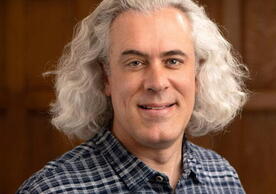
Brian Wood, an Assistant Professor of Anthropology, is co-author of a study in the journal PLoS One that investigated patterns of energetic expenditure among the Hadza, a foraging society in Tanzania, in order to better understand the evolutionary biology of obesity in humans. Their study showed that daily energetic expenditure among the Hadza was not significantly different from people living in modern industrialized societies. Given the extremely low rates of obesity among the Hadza, they conclude that caloric intake is a much more salient factor in the emergence and increases in rates of obesity in many human populations. The abstract and link are below. Wood received his Ph.D. in Anthropology from Harvard University and was a Post-Doctoral Fellow in Environmental Anthropology at Stanford University prior to his appointment at Yale.

Abstract
Western lifestyles differ markedly from those of our hunter-gatherer ancestors, and these differences in diet and activity level are often implicated in the global obesity pandemic. However, few physiological data for hunter-gatherer populations are available to test these models of obesity. In this study, we used the doubly-labeled water method to measure total daily energy expenditure (kCal/day) in Hadza hunter-gatherers to test whether foragers expend more energy each day than their Western counterparts. As expected, physical activity level, PAL, was greater among Hadza foragers than among Westerners. Nonetheless, average daily energy expenditure of traditional Hadza foragers was no different than that of Westerners after controlling for body size. The metabolic cost of walking (kcal kg−1 m−1) and resting (kcal kg−1 s−1) were also similar among Hadza and Western groups. The similarity in metabolic rates across a broad range of cultures challenges current models of obesity suggesting that Western lifestyles lead to decreased energy expenditure. We hypothesize that human daily energy expenditure may be an evolved physiological trait largely independent of cultural differences.
Tuesday, July 31, 2012
Yale University
10 Sachem Street
New Haven, CT 06511